
For many women in the United States, putting on a bra is as automatic as brushing teeth in the morning. It is a staple of the modern wardrobe, an industry worth billions, and a garment that sparks endless debate. But if you stop and think about it, why do female wear bra actually? Is it purely for fashion, strictly for medical support, or simply a social norm we’ve all accepted?
The answer is complex because bodies are diverse. For some, a bra is a torture device they can’t wait to unhook the second they get home. For others, it is an essential tool for pain management and mobility. Understanding what is the purpose of a bra requires looking at anatomy, gravity, social history, and personal comfort.
In this guide, we will break down the science of breast tissue, the truth about sagging, and the benefits of wearing a bra versus going natural. Whether you are looking for reasons to wear a bra or curious about the benefits of sleeping without a bra, we have the answers.
The Anatomy of Support: Cooper’s Ligaments
To understand what is the purpose of a bra, you have to understand the anatomy of the breast. Unlike muscles, breasts are made up of glandular tissue and fat. They do not have muscle tissue to hold them up. Instead, they are supported by delicate connective tissues called Cooper’s ligaments.
Over time, gravity pulls on these ligaments. One of the primary bra support benefits is to act as an external anchor, reducing the strain on these ligaments. While a bra cannot permanently prevent sagging (which is largely determined by genetics, age, and skin elasticity), it lifts the weight off the chest wall. When asking what is the purpose of a bra in a medical context, it is largely about mitigating the immediate downward pull of gravity that stretches skin over the course of a day.
Reducing Back and Neck Pain
For women with larger busts, the question isn’t “should I wear one,” but rather “which one hurts the least?” Heavy breast tissue can alter a person’s center of gravity, causing them to hunch forward. This leads to chronic strain on the neck, shoulders, and upper back.
Why women need bras in this category is strictly functional: a well-fitted bra redistributes the weight of the breast tissue from the shoulders to the sturdy band around the ribcage. By doing so, it improves posture and alleviates spinal pressure. If you suffer from tension headaches or upper back soreness, understanding what is the purpose of a bra regarding weight distribution can be a game-changer for your daily comfort.
Why Women Need Bras for Physical Activity
If you have ever tried to run down a flight of stairs without support, you know exactly what is the purpose of a bra during exercise. Breast tissue moves independently of the body. During high-impact activities like running or jumping, breasts can bounce up to several inches.
This movement isn’t just annoying; it can be painful and damaging to the skin structure. Do bras really support breasts during sports? Absolutely. A sports bra compresses the tissue against the chest wall or encapsulates each breast to minimize movement. This prevents the microscopic tearing of tissues and allows women to move freely without discomfort or self-consciousness.
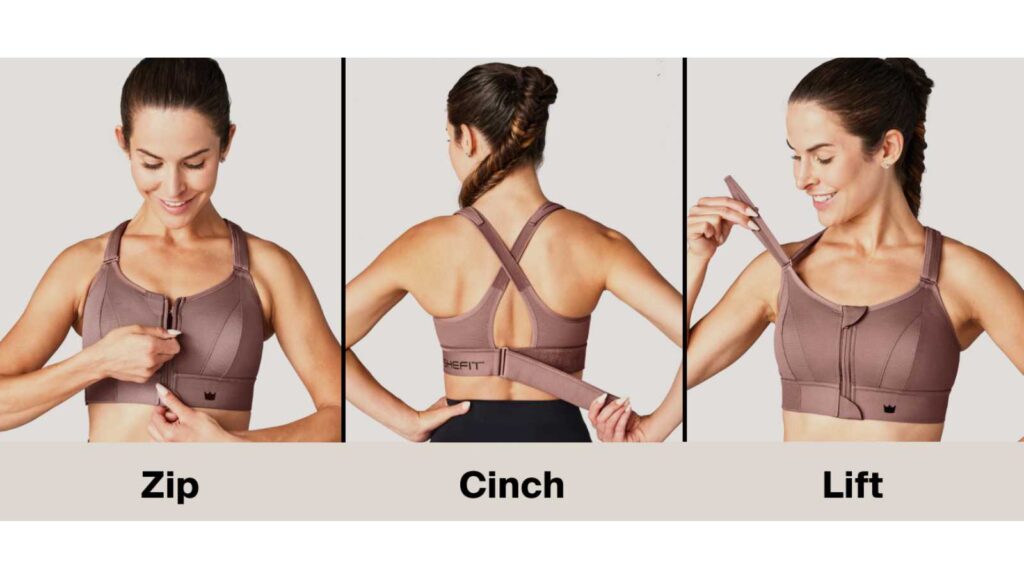
Best Option: High-Impact Sports Support
Finding a bra that stops the “bounce” is essential for active women. A quality high-impact bra protects your ligaments during intense workouts.
Why This Helps:
Standard lingerie isn’t built for kinetic energy. A dedicated sports bra uses technical fabrics and compression engineering to lock movement down, ensuring that your workout focuses on your muscles, not your chest discomfort.
If you’re struggling with chest pain during cardio, consider upgrading your gear. A high-impact sports bra can revolutionize your gym experience. check out our top recommendation here:
Best sports bra for women
Aesthetics and Shaping
Beyond the physical, what is the purpose of a bra in the fashion world? Silhouette. American fashion trends have evolved over decades, from the pointed “bullet bras” of the 1950s to the smooth t-shirt bras of today.
Why women wear bra styles with padding, underwire, or molding is often to achieve a specific shape that complements clothing. Bras can lift, separate, flatten, or enhance cleavage. For many, the purpose of wearing a bra is simply to ensure their clothes hang correctly or to create a smooth line under professional attire. It acts as a foundation garment, giving the wearer control over how their body is perceived.
Modesty and Social Norms
We cannot discuss what is the purpose of a bra without mentioning society. In many professional and social environments in the US, visible nipples are considered taboo or “unprofessional.”
Why does ladies wear bra styles that are lined or padded? Often, it is to conceal the nipple and maintain modesty in air-conditioned offices or public spaces. While the “Free the Nipple” movement challenges these norms, the social expectation remains a driving factor for why women wear bra styles that offer full coverage. For many, it provides a psychological layer of armor and prevents unwanted attention.
Why Girls Start Wearing Bras
Puberty is a transitional time, and understanding why girls start wearing bras involves both physical and emotional growth. Physically, breast buds can be tender and sensitive to friction against clothing. A soft bralette or training bra provides a protective barrier.
Emotionally, it is a rite of passage. Why girls start wearing bras is often linked to fitting in with peers or managing a changing body image. It introduces young women to the concept of what is the purpose of a bra: comfort, coverage, and adapting to a new physical reality.
Is It Necessary to Wear a Bra Every Day?
A common query on search engines is: is it necessary to wear a bra every day? The short answer is no. There is no medical evidence suggesting that going braless for a day, a week, or forever will harm your health.
However, what is the purpose of a bra if not for daily necessity? It comes down to personal preference and lifestyle. If you have a smaller cup size, you might find benefits of wearing a bra are negligible compared to the freedom of going without. Conversely, those with larger busts might find it physically uncomfortable to walk around without support. It is a personal choice, not a medical mandate.
The “No-Bra” Movement and Comfort
In recent years, the trend of going braless has skyrocketed. Women are questioning what is the purpose of a bra if it causes digging straps and poking wires. The “reasons to wear a bra” are being weighed against the sheer comfort of skin breathability and freedom.
This movement highlights that what happens if you don’t wear a bra is rarely catastrophic. Your muscles might actually work a little harder to support the tissue, which some claim leads to better tone, though scientific evidence on this is mixed. Ultimately, if the purpose of wearing a bra for you is purely social, ditching it can be an act of liberation.
What Happens If You Don’t Wear a Bra?
Let’s bust a myth: what happens if you don’t wear a bra? Will you sag immediately? No. Sagging (ptosis) is caused by age, smoking, pregnancy, and genetics.
If you stop wearing a bra, you might notice:
- Improved Circulation: No tight bands restricting blood flow.
- Better Skin Health: Less trapped sweat and bacteria under the breast fold.
- Posture Changes: You may become more aware of your own muscle engagement.
However, asking what happens if you don’t wear a bra during high-impact activity yields a different answer: potential pain and irreversible stretching of the skin. Context matters.
The Nighttime Debate: Benefits of Sleeping Without a Bra
Should you wear a bra to bed? Most experts agree on the benefits of sleeping without a bra. At night, your body needs to rest and recover.
The benefits of sleeping without a bra include:
- Lymphatic Drainage: Tight clothing can restrict lymph nodes in the underarm and chest area. Sleeping free allows for natural detoxification.
- Temperature Regulation: Bras add an extra layer of heat; sleeping without one keeps the body cooler.
- Skin Breathing: It prevents fungal infections that can occur in warm, moist environments under the breast.
If you are wondering if you sleep with a bra on what happens, usually nothing terrible, provided the bra is loose. But generally, the purpose of wearing a bra does not extend to the bedroom.
If You Sleep With a Bra On What Happens?
While we covered the benefits of going sans-bra at night, some women prefer support 24/7. So, if you sleep with a bra on what happens?
If the bra is an underwire or a tight sports bra, you risk:
- Restricted Blood Flow: Tight bands can impede circulation.
- Hyperpigmentation: Constant friction can cause dark spots or irritation.
- Restless Sleep: Discomfort can disrupt your REM cycle.
If you must wear one, what is the purpose of a bra at night? It should purely be for preventing movement that disturbs sleep. Choose a soft, wireless sleep bra.
Best Option: The Ultimate Comfort Sleep Bra
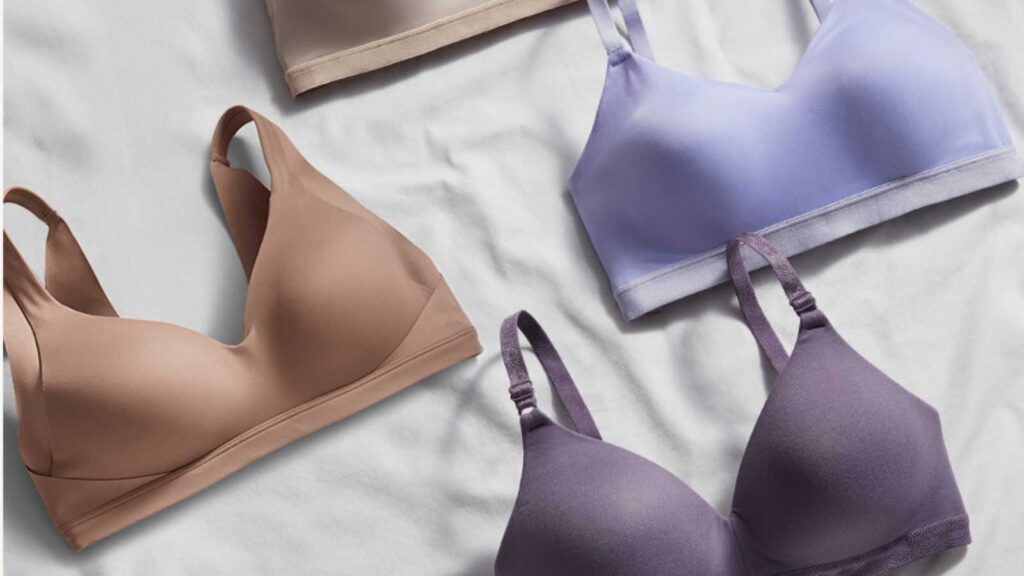
For those who need light support even while dreaming, a specialized sleep bra is the solution. It offers containment without constriction.
Why This Helps:
Unlike a standard bra, a sleep bra has no wires, clasps, or tight elastic bands. It keeps everything in place gently, preventing the discomfort of skin-on-skin friction or shifting during the night, which is especially helpful for pregnant or nursing women.
Wake up refreshed and supported without the dig. Try a soft, breathable sleep bra designed for 24-hour wear. Get yours here:
Super Soft Comfort Bra
Do Bras Really Support Breasts Long-Term?
A famous French study suggested that bras might actually make breasts sag more by allowing the supportive muscles to atrophy. This caused many to ask do bras really support breasts or do they weaken them?
The consensus among US medical professionals is that the study was limited. For most women, the bra support benefits—specifically immediate relief from gravity’s pull—outweigh theoretical muscle atrophy. The pectoral muscles sit behind the breast, not in it. Therefore, building chest muscle doesn’t significantly “lift” the breast tissue itself. Thus, what is the purpose of a bra regarding shape? It maintains the integrity of the skin and ligaments we currently have.
Why Do Female Wear Bra Designs That Are Uncomfortable?
It is a valid question: why do female wear bra types that poke and pinch?
The answer often lies in incorrect sizing. Studies show a vast majority of American women are wearing the wrong size—usually a band that is too big and a cup that is too small. The purpose of wearing a bra is defeated if the fit is wrong. An ill-fitting bra causes pain rather than relieving it. If you are asking why women need bras but hate wearing them, the culprit is likely the fit, not the garment itself.
Psychological Confidence
Finally, what is the purpose of a bra regarding mental health? For many, lingerie is a source of confidence. A matching set can make a woman feel put-together, sexy, and powerful, even if no one else sees it.
Why does ladies wear bra styles like lace or push-ups? It is a form of self-expression. The reasons to wear a bra extend beyond physics into psychology. It can be a tool for body positivity, allowing women to celebrate their shape.
Conclusion: Balancing Support and Freedom
So, what is the purpose of a bra? It is a multifaceted tool. It serves as a mechanical support for tissue, a fashion accessory for silhouette, a shield for modesty, and a piece of athletic equipment.
Whether you prioritize the benefits of wearing a bra for back support or prefer the benefits of sleeping without a bra for comfort, the choice is yours. There is no biological rule stating is it necessary to wear a bra every day.
Listen to your body. If you are in pain, seek better support. If you are uncomfortable, take it off. Understanding why women need bras—and when they don’t—empowers you to make the best decision for your health and lifestyle.
FAQs:
Does wearing a bra prevent sagging?
Not entirely. While a bra lifts the breasts while you are wearing it, it cannot permanently reverse the effects of gravity, age, or genetics. However, it can prevent the stretching of Cooper’s ligaments during high-impact activities, which helps maintain shape over time.
Is it bad to sleep in a bra?
It is generally better to sleep without one to allow for better circulation and lymphatic drainage. However, if you choose to sleep in a bra, ensure it is a soft, wireless, and loose-fitting style to avoid restricting blood flow or damaging the skin.
How often should I wash my bra?
In the US, the general recommendation is to wash your bra after every 2-3 wears. If it is a sports bra or if you have been sweating heavily, you should wash it after every single use to prevent bacteria buildup and skin irritation.
How do I know if I’m wearing the wrong size bra?
Signs of a bad fit include straps that dig into your shoulders, a band that rides up your back, cups that gap or overflow (quad-boob), or an underwire that pokes your breast tissue. The support should come from the band, not the straps.
At what age should a girl start wearing a bra?
There is no specific age; it depends on physical development. Most girls start wearing a training bra or crop top around the onset of puberty (ages 9-12) when breast buds develop and they become conscious of sensitivity or modesty.