Key Takeaways
- Serum always goes before moisturizer because smaller molecules penetrate first
- The “thinnest to thickest” rule maximizes product absorption
- Waiting 1-2 minutes between layers lets active ingredients absorb without dilution
- Serums deliver concentrated actives while moisturizers hydrate and lock in treatment
- Skipping moisturizer after serum lets actives evaporate, wasting effectiveness
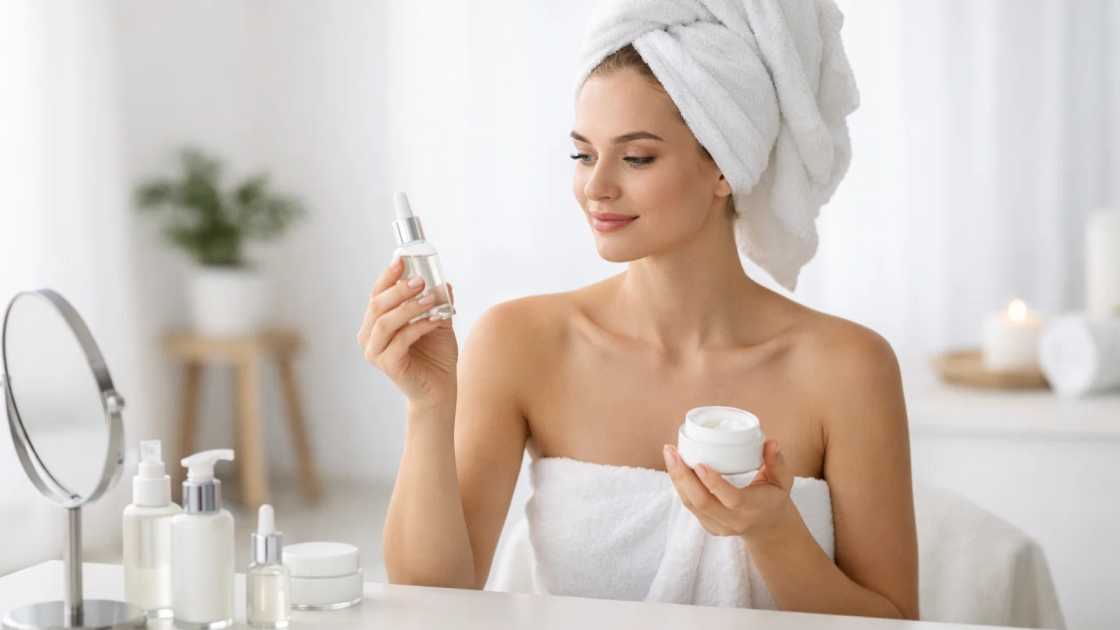
You’re holding a serum in one hand and moisturizer in the other, wondering which one goes on first. Serum before or after moisturizer? The answer determines whether your expensive products actually work or whether you’re layering them in a way that blocks absorption and wastes money.
This guide explains exactly does serum goes before or after moisturizer, why the order matters, and the difference between serum and moisturizer that makes each product essential. You’ll discover if it is ok to use a serum and a moisturizer together and how long to wait to apply moisturizer after serum.
By the end, you’ll know the exact application sequence, whether moisturizer first or serum makes sense scientifically, and why skipping either product compromises results.
Serum Before or After Moisturizer and What Order Actually Works
Serum before or after moisturizer? Serum goes before moisturizer, always. This sequence follows the fundamental skincare principle of applying products from thinnest to thickest consistency. Serums have a water-based or lightweight formula with smaller molecules designed to penetrate deeply. Moisturizers contain larger molecules and occlusives that seal the surface.
When you apply serum first, the lightweight formula absorbs quickly, delivering active ingredients like vitamin C or retinol to deeper skin layers. Following with moisturizer creates a protective barrier that locks in the serum’s actives and prevents water loss.
Reversing the order blocks absorption. Applying moisturizer first creates a barrier that prevents water-based serums from penetrating. The serum’s active ingredients sit uselessly on top instead of reaching target layers.
The molecular size difference determines absorption order. Serums contain molecules between 3,000-10,000 daltons. Moisturizers contain molecules ranging from 10,000-100,000+ daltons. Applying smaller molecules first ensures they reach their intended depth.
Difference Between Serum and Moisturizer You Need to Understand
The difference between serum and moisturizer starts with their purposes. Serums deliver concentrated active ingredients targeting specific concerns like hyperpigmentation or fine lines. They contain high concentrations of vitamins, antioxidants, or acids in a lightweight base. Moisturizers primarily hydrate skin and strengthen the moisture barrier using humectants and emollients.
Texture reveals another key distinction. Serums feel thin and absorb within 30-60 seconds. Moisturizers feel richer, take 2-5 minutes to absorb, and create a protective layer.
Concentration levels differ dramatically. A vitamin C serum might contain 10-20% L-ascorbic acid, while a vitamin C moisturizer contains 1-5%. The serum’s higher concentration produces visible results faster.
Cost reflects concentration differences. Serums cost $30-150 per ounce at stores like Sephora or Ulta, while moisturizers cost $10-50 per ounce. You use less serum per application, making the higher cost reasonable.
Is It Ok to Use a Serum and a Moisturizer Together on Your Face
Is it ok to use a serum and a moisturizer together? Yes, using both produces better results than either alone. Serums deliver treatment through active ingredients but don’t provide adequate hydration. Moisturizers hydrate and protect but lack concentrated actives.
The combination creates a complete system. Serum treats specific issues while moisturizer maintains overall health and maximizes the serum’s effectiveness by preventing evaporation. Properly hydrated skin absorbs active ingredients more effectively.
Some people worry about using too many products. Using serum without moisturizer wastes the serum because the actives evaporate. Using moisturizer without serum maintains basic health but misses targeted treatment benefits.
The only exceptions are specialized serums that specifically instruct users to skip moisturizer, or extremely oily skin using a hydrating serum as their sole moisture source during summer.
How Long to Wait to Apply Moisturizer After Serum for Best Results
How long to wait to apply moisturizer after serum? Wait 1-2 minutes for most serums to allow partial absorption before applying moisturizer. This brief pause lets the serum’s active ingredients begin penetrating without getting diluted.
Water-based serums containing hyaluronic acid absorb quickly and need only 60-90 seconds. Oil-based serums with vitamin E require 2-3 minutes. Prescription-strength serums with retinoids might need 3-5 minutes.
Your skin should feel slightly tacky but not wet when you apply moisturizer. If the serum is still visibly wet, wait another minute. If your skin feels completely dry, you’ve waited too long.
Climate affects optimal wait times. Humid environments slow absorption, requiring an extra 30-60 seconds. Dry climates speed absorption. Adjust based on seasonal changes and indoor versus outdoor application.
Do You Really Need Both Serum and Moisturizer in Your Routine
Do you really need both? Most skin types benefit from using both because they serve complementary functions. Serums provide targeted treatment through concentrated actives, while moisturizers provide hydration and barrier protection.
Young skin (teens to early 20s) with no specific concerns might skip serum and use moisturizer alone. Once you hit your mid-20s or develop specific concerns, adding serum becomes beneficial.
Extremely oily skin represents another exception. Some people use a hydrating serum as their primary moisture source during summer. Brands like CeraVe and Neutrogena make gel-cream moisturizers for when additional moisture is needed.
Budget constraints might force choosing one product. If preventing aging matters most, invest in serum and use a basic moisturizer. If dryness is your main issue, invest in moisturizer and add serum later.
Conclusion
Serum before or after moisturizer? The answer is always serum first, then moisturizer. This sequence respects molecular size differences, ensures proper penetration, and maximizes effectiveness. The “thinnest to thickest” rule applies universally.
The difference between serum and moisturizer makes both necessary rather than interchangeable. Serums deliver concentrated treatment while moisturizers provide hydration and protection.
Start tomorrow by applying your routine in the correct order: cleanse, pat dry, apply serum, wait 1-2 minutes, apply moisturizer, wait 2-3 minutes, then sunscreen. Time each step on your phone for the first week until the routine becomes automatic.
People also read: Sunscreen or Moisturizer First and Getting the Order Right
FAQs
Does serum go before or after moisturizer?
Does serum go before or after moisturizer? Serum always goes before moisturizer in your skincare routine. The thinner, concentrated serum penetrates first, delivering active ingredients to deeper layers, while the thicker moisturizer seals everything in.
Can I skip moisturizer after applying serum?
Skipping moisturizer after serum lets the active ingredients evaporate before they can work. Even oily skin benefits from a lightweight moisturizer after serum to lock in treatment. Choose an oil-free gel moisturizer if you’re concerned about heaviness.
What happens if I apply moisturizer before serum?
Applying moisturizer or serum first in the wrong order creates a barrier that blocks serum absorption. The serum’s active ingredients sit on top instead of penetrating, reducing effectiveness by 50-75%.
How long should I wait between serum and moisturizer?
How long to wait to apply moisturizer after serum is typically 1-2 minutes. This allows the serum to begin absorbing without getting diluted. Your skin should feel slightly tacky but not wet when you apply moisturizer.
Can I mix serum and moisturizer together?
Mixing serum and moisturizer dilutes the serum’s active ingredient concentration and compromises effectiveness. Apply them separately with a brief wait between to ensure each product performs its intended function.