
Introduction
Which Beats headphones deliver the sound quality and features you need without overpaying? The beats solo 4 vs studio pro debate continues to confuse shoppers across the United States, especially with Studio Pro models appearing at steep discounts alongside the newer Solo 4 release. You’re not alone if you’ve wondered whether on-ear or over-ear design matters more, or why premium models suddenly drop to $170 when they originally cost $350.
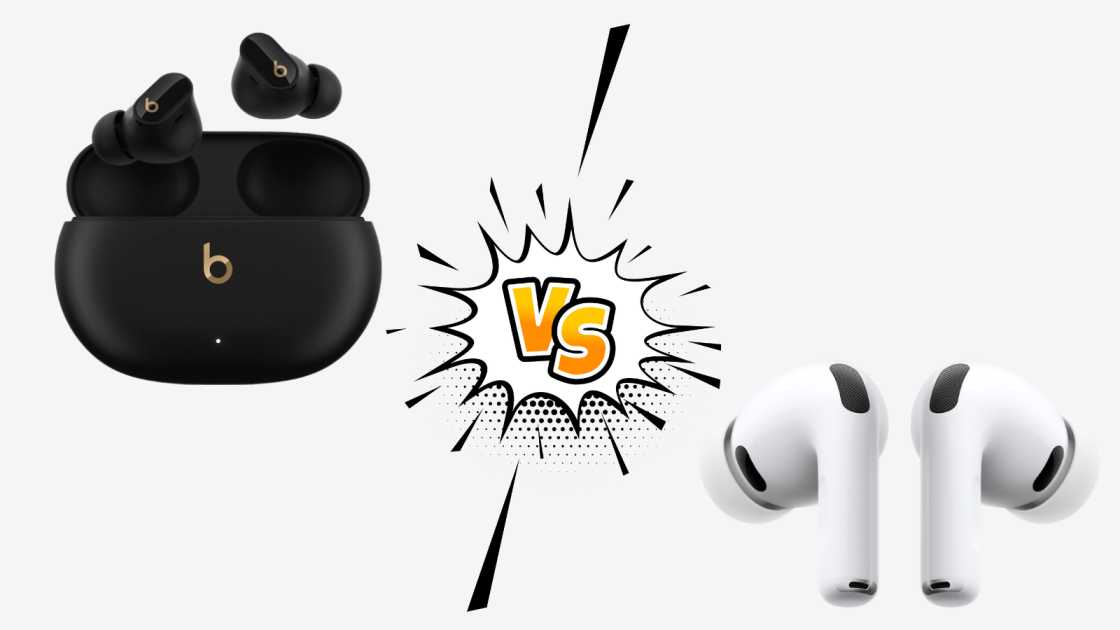
This guide breaks down the best between Beats Studio Buds Vs AirPods Pro, every meaningful difference between beats solo 4 and studio pro models, plus comparisons across the entire Beats lineup including Studio 3, Studio Buds, Fit Pro, and how they stack up against AirPods Pro. You’ll discover which features justify the price gaps, what trade-offs exist between comfort and performance, and whether upgrading from older models makes financial sense right now.
By the end, you’ll know exactly which Beats headphones match your listening habits, budget, and must-have features—whether that’s noise cancellation for daily commutes, 84-hour battery life for travel, or spatial audio for immersive entertainment.
Beats Solo 4 vs Studio Pro: On-Ear vs Over-Ear
The most immediate distinction in the beats solo 4 vs studio pro comparison is physical design. Solo 4 uses an on-ear form factor that rests against your ears, while Studio Pro employs over-ear cups that completely surround them. This design choice creates a ripple effect across comfort, portability, and sound isolation.
On-ear headphones like Solo 4 weigh less and fold more compactly, making them easier to slip into bags without taking up significant space. Over-ear models like Studio Pro provide superior passive noise isolation simply because the ear cups create a physical seal around your ears. Users who wear glasses or have sensitive ears often prefer over-ear designs since they distribute pressure around the ear rather than directly against it.
Health experts recommend limiting headphone listening to 80 decibels for no more than 40 hours weekly to prevent permanent noise-induced hearing loss, per WHO safe listening standards.
Sound-wise, over-ear headphones typically produce a wider soundstage—the Studio Pro delivers exactly that advantage with clearer separation between instruments and less distortion at higher volumes. However, the Solo 4 produces noticeably louder audio at the same volume level, which appeals to listeners who want maximum output without turning dials to the maximum. Neither design is objectively superior; your choice depends on whether you prioritize portability and volume (Solo 4) or comfort and sound clarity (Studio Pro).
Upgrade Review: Beats Studio Pro vs Studio 3
The beats studio pro vs studio 3 upgrade brings substantial improvements that justify the newer model’s existence. Studio Pro introduces USB-C lossless audio through its built-in DAC, eliminating the compression that plagues Bluetooth connections and delivering 24-bit/48kHz quality when wired. Studio 3 lacks this feature entirely, limiting you to Bluetooth or analog 3.5mm connections that can’t match the Studio Pro’s digital clarity.
ANC technology works through destructive interference, where microphones capture ambient noise and speakers generate inverse sound waves that cancel external sounds in real time.
Active noise cancellation receives a major overhaul on Studio Pro, which uses six microphones (versus Studio 3’s older, lower-quality setup) to adapt intelligently to changing environments. The result is noticeably better background noise reduction, plus a transparency mode that Studio 3 doesn’t offer at all. Battery life improves to 40 hours on Studio Pro compared to Studio 3’s decent but shorter lifespan.
Sound quality shifts toward a more balanced profile on Studio Pro, moving away from the bass-heavy signature that defined Studio 3. This makes Studio Pro more versatile across music genres, though bass enthusiasts might miss the older model’s punch. With Studio Pro frequently discounted to $170-$200 (down from $350), the beats studio 3 vs beats studio pro decision heavily favors the newer model unless you find Studio 3 for under $100.
Buds or Cans? Beats Studio Buds vs AirPods Pro
The beats studio buds vs airpods pro matchup pits two earbud philosophies against each other. Studio Buds offer up to 8 hours of playback per charge with 24 total hours from the case, outlasting AirPods Pro 2’s 6 hours per charge (30 hours total with case). Both feature IPX4 water resistance, spatial audio, and active noise cancellation, making them suitable for workouts and commutes.
AirPods Pro 2 deliver superior noise cancellation that reportedly blocks twice as much ambient sound as Studio Buds, creating a more isolated listening experience on airplanes or noisy offices. Sound quality also tilts toward AirPods Pro 2, which offer more textural detail, better timing, and more cohesive integration of musical elements compared to Studio Buds’ slightly disconnected presentation. The tweaked vent system on AirPods Pro 2 creates a more open, spacious sound.
However, beats studio buds vs airpods pro 2 comparisons reveal one crucial advantage for Beats: broader compatibility. Studio Buds work seamlessly with both iOS and Android devices using Bluetooth 5.2, while AirPods Pro 2’s H2 chip and personalized spatial audio features deliver their full potential only within Apple’s ecosystem. If you use multiple device types or don’t own an iPhone, Studio Buds provide better cross-platform functionality at a lower price point.
Specs Breakdown: Beats Solo 4 vs Studio Pro Wireless
The beats solo 4 vs beats studio pro wireless headphones specs reveal where each model excels. Solo 4 dominates battery performance with an astonishing 84 hours of continuous playback—more than double Studio Pro’s 40 hours with ANC off (31 hours with ANC enabled). This battery advantage makes Solo 4 unbeatable for extended travel or users who forget to charge devices regularly.
Studio Pro includes active noise cancellation, transparency mode, and three EQ presets accessible via USB-C connection. Beats solo 4 vs beats studio pro specs comparisons show Solo 4 lacks ANC entirely, relying instead on passive isolation from its on-ear design. Both support spatial audio with dynamic head tracking, 24-bit/48kHz lossless audio via USB-C, and work with both iOS and Android.
Connectivity uses Bluetooth 5.3 on Studio Pro versus Solo 4’s custom Beats chip. Studio Pro’s USB-C port functions as a digital audio input that bypasses your phone’s DAC for superior wired sound quality. Solo 4 costs $199 MSRP while Studio Pro launched at $349 but now frequently sells for $170-$200, making the pricing nearly identical despite Studio Pro’s additional features. At current sale prices, Studio Pro represents better value for users who want noise cancellation.
Bluetooth 5.3 introduces advanced features like LC3 codec support and channel classification to reduce interference, delivering higher audio quality at lower power consumption than earlier versions.
Performance: Beats Fit Pro vs Studio Buds Plus
In the beats fit pro vs beats studio buds + comparison, battery life tips toward Studio Buds Plus. Studio Buds Plus deliver 8 hours 22 minutes with ANC enabled and 28 additional hours from the case, beating Fit Pro’s approximately 6 hours per charge and 18 hours from the case. Both use USB-C charging and offer 5-minute quick charges that provide one hour of playback.
The beats studio buds plus vs beats fit pro sound quality battle produces a split decision. Fit Pro edges ahead with better ANC performance, particularly against low-frequency noises like traffic rumble and ambient chatter. Fit Pro’s transparency mode also captures external sounds more clearly, creating greater situational awareness. Studio Buds Plus focus more on frequencies above 10kHz, producing crisper detail in higher registers that benefits cymbal crashes and vocal sibilance.
Fit Pro delivers more emphatic bass and better-balanced overall sound for users who want full-bodied audio. Studio Buds Plus improved their transparency mode and reduced distortion in bass and midrange compared to original Studio Buds, creating cleaner sound despite slightly less aggressive ANC. The Fit Pro’s wingtip design provides more secure fit during workouts, while Studio Buds Plus use a more traditional earbud shape that some users find more comfortable for extended wear.
Old vs New: Beats Solo Pro vs Studio Pro
The beats solo pro vs studio pro debate compares two different design philosophies. Solo Pro uses an on-ear design similar to Solo 4, while Studio Pro employs over-ear cups. Solo Pro launched earlier with its own set of features, but Studio Pro’s introduction created overlap that confused buyers about which “Pro” model to choose.
Beats solo vs studio pro decisions hinge on whether you prefer the compact footprint of on-ear designs or the comfort and sound isolation of over-ear construction. Studio Pro’s over-ear design naturally provides better passive noise isolation and typically produces less listening fatigue during multi-hour sessions. The over-ear cups also create a larger soundstage with better instrument separation.
Both models include noise cancellation and premium features, but Studio Pro’s newer release date means it incorporates more recent technology like improved Bluetooth 5.3, USB-C lossless audio with internal DAC, and six-microphone ANC systems. Studio Pro’s frequent discounts to $170-$200 also make it more affordable than Solo Pro in many current retail situations. Unless you specifically need the smaller size of on-ear headphones, Studio Pro delivers superior technology and value.
Why Are Beats Studio Pro On Sale?
Why are beats studio pro on sale at discounts reaching 51-57% off their $350 MSRP? Several factors explain these aggressive price cuts. First, Beats Studio Pro launched in 2023, and retailers typically discount previous-generation models as they age, even when no direct successor exists yet. Second, competitive pressure from Sony, Bose, and even Apple’s own AirPods Max forces Beats to maintain attractive pricing to capture market share.
Third, seasonal sales events like Black Friday, Memorial Day, and back-to-school promotions create opportunities for deep discounts that draw traffic to online and physical stores. Amazon leads these promotions, frequently offering Studio Pro at $170-$200 across multiple colorways. Fourth, Apple’s ownership of Beats allows the company to use aggressive pricing as a customer acquisition strategy—once users enter the Apple ecosystem through affordable Beats headphones, they’re more likely to purchase iPhones, iPads, and other Apple products.
Looking for a beats studio pro alternative? Consider Solo 4 if you prioritize battery life over noise cancellation, or explore Sony WH-1000XM5 and Bose QuietComfort Ultra if you want class-leading ANC. However, at current $170-$200 sale prices, Studio Pro undercuts most competitors while delivering solid performance across all key metrics.
Should You Upgrade from Studio 3?
Should you upgrade from Studio 3? The beats pro vs studio 3 comparison reveals significant technological gaps that make upgrading worthwhile when Studio Pro hits $200 or less. Studio 3 uses outdated Bluetooth technology, lacks transparency mode, and can’t match Studio Pro’s six-microphone ANC system. The absence of USB-C lossless audio on Studio 3 means you miss out on the highest-quality wired listening experience.
Studio Pro’s more balanced sound signature appeals to listeners who found Studio 3 too bass-heavy. The beats studio vs studio pro upgrade brings 40-hour battery life that matches or exceeds Studio 3’s performance while adding fast charging. If your Studio 3 headphones still function well and you primarily listen via Bluetooth without needing cutting-edge ANC, holding off makes sense.
However, if you frequently use noise cancellation in loud environments, want lossless audio quality via USB-C, or find Studio Pro discounted below $200, upgrading delivers measurable improvements in daily use. The jump from Studio 3 to Studio Pro provides bigger quality gains than the jump from Studio Pro to competing $350 models from Sony or Bose.
Conclusion
The beats solo 4 vs studio pro decision ultimately depends on your priorities: choose Solo 4 for unbeatable 84-hour battery life and compact portability, or select Studio Pro for active noise cancellation, over-ear comfort, and USB-C lossless audio. Studio Pro’s frequent discounts to $170-$200 make it exceptional value compared to its $350 MSRP, especially when you consider the ANC and sound quality improvements over Studio 3.
If you’re choosing between Beats earbuds, Studio Buds Plus excel in battery longevity while Fit Pro deliver superior noise cancellation and bass response. The difference between beats solo 4 and studio pro extends beyond design to fundamental features like ANC availability, battery duration, and sound characteristics that shape your daily listening experience.
Check current prices on Amazon, Target, and Best Buy to find the best deals—Studio Pro frequently drops below $200, making it more affordable than Solo 4’s $199 MSRIP while offering more features. Don’t wait too long on major sales; inventory at heavily discounted prices sells out quickly during holiday shopping periods.
People also read: Beats Studio Pro Vs AirPods Max & More For Music Lovers.
Frequently Asked Questions
Does Beats Solo 4 have noise cancellation?
No, Beats Solo 4 does not include active noise cancellation. The on-ear design provides some passive noise isolation, but it cannot electronically cancel ambient sounds like Studio Pro’s ANC system.
Which has better battery life, Solo 4 or Studio Pro?
Beats Solo 4 delivers approximately 84 hours of continuous playback, significantly outlasting Studio Pro’s 40 hours (ANC off) or 31 hours (ANC on). Solo 4’s battery advantage makes it ideal for extended travel without frequent charging.
Can you use Beats Studio Pro wired with lossless audio?
Yes, Studio Pro’s USB-C port supports 24-bit/48kHz lossless audio using the headphones’ internal DAC. This bypasses your device’s audio processing for higher-quality wired listening compared to standard Bluetooth or analog connections.
Are Beats Fit Pro better than Studio Buds Plus?
Beats Fit Pro provide superior active noise cancellation and more balanced sound with stronger bass. However, Studio Buds Plus offer longer battery life (8+ hours vs 6 hours) and slightly better detail in higher frequencies above 10kHz.
Why is Studio Pro cheaper than its $350 original price?
Retailers discount Studio Pro by 50-57% during seasonal sales and to remain competitive against Sony and Bose models. The headphones launched in 2023, making current $170-$200 pricing a strategy to clear inventory and attract customers.