Introduction
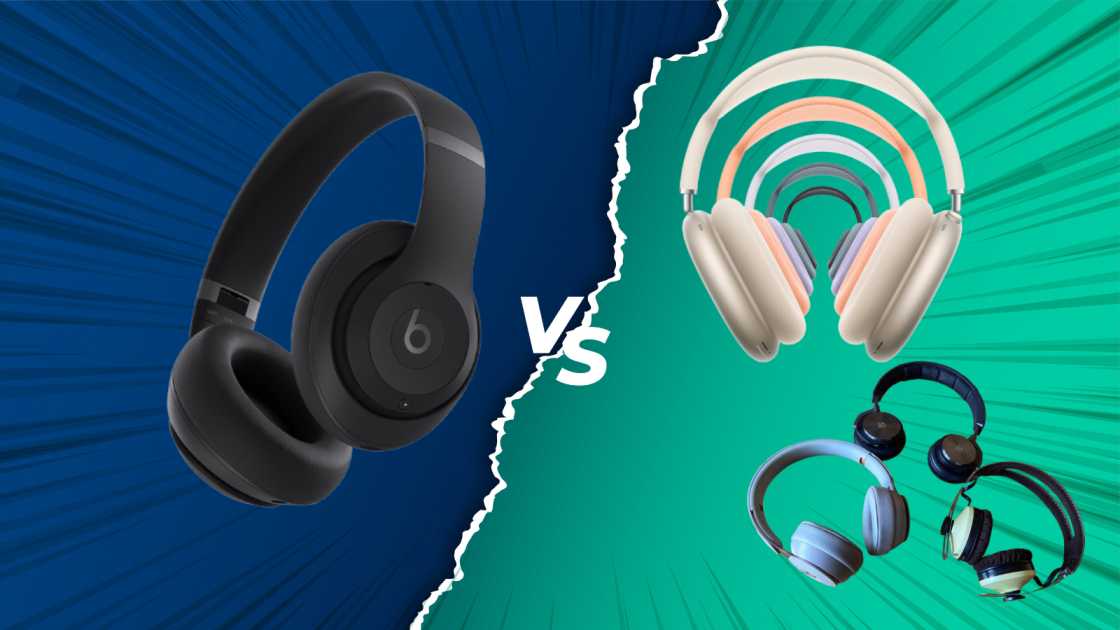
You’re standing in the headphone aisle-or scrolling through pages of premium options online-and the price tags make you pause. The beats studio pro vs airpods max debate isn’t just about brand loyalty anymore; it’s about whether spending $549 justifies what you get compared to a $179 alternative. What if the cheaper option delivers 90% of the performance at less than half the cost?
Premium headphones promise exceptional sound, noise cancellation that blocks out airplane engines, and comfort for marathon listening sessions. When you’re comparing beats studio pro vs airpods max, beats studio pro vs bose quietcomfort, or beats studio pro vs sony wh 1000xm5, the differences matter because you’ll wear these daily-commuting, working, traveling, or just escaping into music at home. The wrong choice means buyer’s remorse every time you put them on.
This guide breaks down how the Beats Studio Pro stacks up against the AirPods Max, Sony WH-1000XM5, Sony WH-1000XM4, Bose QuietComfort, and Bose QuietComfort Ultra across the categories that actually affect your listening experience. You’ll discover which headphone wins on sound quality, noise canceling power, battery endurance, and overall value-with real pricing data and performance metrics to guide your decision.
Beats Studio Pro vs AirPods Max: Is the Price Gap Justified?
The Apple AirPods Max retail at $549 but frequently drop to $399-$449 during sales, while the Beats Studio Pro launched at $349 and now regularly sell for $179-$250. This price difference-often $200 or more-positions these as very different value propositions despite sharing the same parent company.
The AirPods Max deliver superior sound quality, better noise canceling across all frequency ranges, and more premium materials including aluminum ear cups and a stainless steel headband. The noise cancellation on the AirPods Max excels particularly with midrange and high-frequency sounds like nearby conversations and clinking glasses, almost completely eliminating city noise. The Beats Studio Pro handles low-frequency rumble well but falls short in blocking midrange and treble sounds.
Sound quality reveals the clearest difference. While both headphones support Spatial Audio, Dolby Atmos, and Transparency Mode, the AirPods Max provide more refined audio with better clarity and detail. Interestingly, despite Beats’ bass-heavy reputation, the AirPods Max actually have more bass bloat in this matchup. The Beats Studio Pro uses custom 40mm drivers with 80% less distortion than previous Beats models and delivers surprisingly detailed sound that satisfies most listeners, just not quite matching the AirPods Max’s refinement.
What makes this comparison compelling is that the beats studio pro vs apple airpods max performance gap doesn’t match the price gap. The AirPods Max costs roughly twice as much but doesn’t deliver twice the performance. Both headphones share essentially the same feature set, making the Beats Studio Pro the superior value for budget-conscious buyers who want premium features without the premium price tag.
Noise Canceling Battle: Beats Studio Pro vs Bose QuietComfort
Active noise cancellation separates acceptable headphones from ones you’ll actually use on flights or in noisy offices. The beats studio pro vs bose quietcomfort comparison reveals two different approaches to blocking external sound.
The Bose QuietComfort (the standard model) and the Beats Studio Pro both offer solid ANC performance for everyday use-coffee shops, offices, and moderate commutes. The Bose traditionally edges ahead in overall noise cancellation effectiveness, particularly in the mid and high frequencies where human voices and background chatter live. The Beats Studio Pro performs best with low-frequency rumble like engine noise and city hum but doesn’t match Bose’s across-the-board attenuation.
Battery life tilts decisively toward the Beats. The Beats Studio Pro delivers up to 40 hours on a single charge, while the Bose QuietComfort offers 24 hours. This 16-hour advantage means you’ll charge the Beats roughly half as often-a practical benefit that adds up over months of daily use. Both manufacturers’ battery claims prove accurate in real-world testing.
Price positioning makes this choice clearer. The beats studio pro or bose quiet comfort decision often comes down to whether you prioritize maximum noise cancellation (choose Bose) or longer battery life and better value (choose Beats). For travelers who spend hours on planes weekly, the Bose QuietComfort’s superior ANC justifies the investment. For daily commuters and general listeners, the Beats Studio Pro’s combination of good-enough ANC and exceptional battery life offers better overall utility.
The Beats Studio Pro also includes three distinct sound profiles when using USB-C audio: Beats Signature for balanced music, Entertainment for movies and games, and Conversation for optimizing voice in calls and podcasts. The bose quietcomfort vs beats studio pro comparison ultimately reveals two quality options serving slightly different priorities rather than one clear winner.
Sony XM5 vs Beats Studio Pro: Which Has Better Sound?
The sony wh-1000xm5 vs beats studio pro debate centers on two critical performance areas: noise cancellation and sound quality. The Sony WH-1000XM5 represents one of the current best-in-class options for active noise cancellation, standing alongside the Bose QuietComfort Ultra at the top tier. The Beats Studio Pro sits one or two tiers below in ANC performance, closer to the Sennheiser Momentum 4 and AirPods Max.
Sound quality testing reveals a surprising outcome. The Beats Studio Pro achieves an exceptional 4.8 out of 5.0 in MDAQS (Multi-Dimensional Audio Quality Score) testing, indicating most listeners will be highly satisfied with its out-of-the-box sound quality. The Sony WH-1000XM5 delivers decent performance with good tuning and immersiveness but shows some distortion issues and doesn’t match the Beats’ consumer appeal in standardized testing. This makes the Beats Studio Pro the winner for pure sound quality despite Sony’s reputation.
Where the beats studio pro vs sony wh 1000xm5 comparison favors Sony is noise cancellation. If you regularly fly or work in extremely noisy environments, the Sony XM5’s superior ANC across the entire frequency spectrum provides noticeably better isolation. The Sony also offers more robust sound customization through its companion app, allowing you to EQ the sound to your preferences-something the Beats only provides via USB-C connection with preset profiles.
The Sony WH-1000XM5 includes a hardshell case but doesn’t fold or collapse, making it bulkier for travel compared to the Beats Studio Pro’s compact folding design with a softshell case. Both headphones include Spatial Audio technology (360 audio on Sony, Dolby Atmos on Beats), modern features like transparency modes, and built-in microphones for calls. The Beats integrates more seamlessly with Apple devices, while Sony offers better multi-device connectivity for mixed ecosystems.
Value Option: Beats Studio Pro vs Sony XM4
The sony xm4 vs beats studio pro comparison represents the sweet spot for value-conscious buyers seeking premium features without flagship prices. The Sony WH-1000XM4 retails at $348 but typically sells for around $170-$248, while the Beats Studio Pro launched at $349 and now commonly appears at $179-$220. Both headphones offer similar current market pricing, making the choice about features rather than cost.
The Sony WH-1000XM4 delivers better noise cancellation across the entire frequency range compared to the Beats Studio Pro. Sony’s ANC blocks more noise consistently, maintaining comfort during long sessions without needing adjustment. This mature 2020 model has proven its worth with years of positive user experiences and represents tested, reliable performance.
The beats studio pro vs sony wh 1000xm4 battery comparison shows the Beats with approximately 40 hours of playback versus the Sony’s competitive but slightly lower endurance. The Beats also supports lossless audio via USB-C connection, enabling high-fidelity streaming and the ability to use the headphones while charging-a feature the Sony XM4 lacks. This makes the Beats more versatile for audiophiles who want wired listening options.
Sound signature differs significantly. The Sony WH-1000XM4 offers balanced, neutral sound that works well across all music genres, appealing to listeners who prefer accuracy over emphasis. The Beats Studio Pro maintains a bass-forward signature great for hip-hop, pop, and EDM, though much more refined than older Beats models with 80% less distortion. The Beats’ custom 40mm drivers deliver clean, tight bass that doesn’t muddy the overall sound.
For frequent travelers prioritizing noise cancellation and multi-device connectivity, the Sony WH-1000XM4 delivers more capability per dollar. For Apple ecosystem users who value seamless integration and want flexible wired listening with multiple sound profiles, the Beats Studio Pro justifies its similar price. The sony wh-1000xm5 vs beats studio pro comparison revealed Sony’s ANC advantage, but the older XM4 model offers nearly identical noise canceling at a lower price, making it the budget-conscious choice.
Comfort Test: Beats Studio Pro vs Bose QuietComfort Ultra
Comfort determines whether premium headphones become your daily drivers or expensive shelf decorations. The bose quietcomfort ultra vs beats studio pro comparison reveals different design philosophies affecting long-term wearability.
The Bose QuietComfort Ultra builds on Bose’s decades-long reputation for supremely comfortable headphones. Users consistently report the ability to wear Bose models for 2-3 hour sessions-perfect for movie watching or long flights-without discomfort or the need for adjustment. Bose achieves this through plush ear cushions, even weight distribution, and moderate clamping force that seals without squeezing.
The Beats Studio Pro receives mixed comfort feedback. Some users note the clamping force creates discomfort during extended wear. The headphones use an aluminum frame and premium materials that look and feel durable but add weight compared to some competitors. The ear cups provide good passive isolation but may cause heat buildup during long sessions in warm environments.
Battery life again favors the Beats with 40 hours compared to the Bose QuietComfort Ultra’s 24 hours. This 16-hour difference matches the standard Bose QuietComfort model and means the beats studio pro vs bose quietcomfort ultra choice involves trading some comfort for significantly longer battery life. Both manufacturers’ battery ratings prove accurate in real-world testing, with the Beats Studio Pro ranking second in its class behind only the Sennheiser Momentum 4’s exceptional 60-hour endurance.
The Bose QuietComfort Ultra sits at the top tier of noise cancellation alongside the Sony WH-1000XM5, providing superior isolation compared to the Beats Studio Pro. If you need maximum noise blocking and prioritize comfort above all else, the bose quietcomfort ultra vs beats studio pro comparison points toward Bose. If you want good noise canceling, much longer battery life, and don’t mind adjusting fit occasionally, the Beats Studio Pro offers better overall value despite comfort compromises.
Microphone Quality: Beats Studio Pro vs Competitors
Call quality and microphone performance often get overlooked until you’re on an important Zoom meeting or taking a call on a noisy street. The Beats Studio Pro includes upgraded voice-targeting microphones that actively filter background noise, delivering 27% better voice clarity than the previous Beats Studio 3 Wireless.
The Beats Studio Pro uses six microphones for noise canceling and voice calling, creating impressive call performance even in challenging environments. Testing on noisy New York City streets demonstrated very good noise reduction during calls, representing a significant upgrade from previous Beats headphones. These voice-targeting microphones work to enhance your voice clarity while suppressing ambient sounds that would otherwise interfere with conversations.
When comparing beats studio pro vs airpods max for calls, both headphones deliver excellent microphone quality suitable for professional use. The AirPods Max benefits from Apple’s computational audio processing, though the Beats Studio Pro’s six-microphone array provides comparable real-world performance at a much lower price point.
The beats studio pro vs bose models comparison shows similar call quality across the board. Bose headphones traditionally excel at microphone performance, and both the QuietComfort and QuietComfort Ultra deliver clear voice pickup. The Sony WH-1000XM5 and WH-1000XM4 also provide solid call quality, though some users report the Sony models pick up slightly more wind noise in outdoor conditions compared to the Beats and Bose options.
For remote workers, content creators, or anyone taking frequent calls, the Beats Studio Pro’s microphone system performs at a level that won’t embarrass you in professional settings. The Conversation profile available via USB-C connection specifically optimizes voice for phone calls and podcasts, further enhancing clarity when you need it most. This makes the beats studio pro vs competitors comparison favorable for business use without requiring a separate headset.
Battery Life Comparison Chart
| Headphone Model | Battery Life (No ANC) | Battery Life (With ANC) | Fast Charge | Current Price Range |
| Beats Studio Pro | Up to 40 hours | Up to 24 hours | 10 min = 4 hours | $179–$250 |
| Apple AirPods Max | Not specified | Up to 20 hours | 5 min = 1.5 hours | $399–$549 |
| Sony WH-1000XM5 | ~30 hours | ~30 hours | 3 min = 3 hours | $300–$400 |
| Sony WH-1000XM4 | ~38 hours | ~30 hours | 10 min = 5 hours | $170–$248 |
| Bose QuietComfort | Up to 24 hours | Up to 24 hours | 15 min = 2.5 hours | $250–$350 |
| Bose QuietComfort Ultra | Up to 24 hours | Up to 24 hours | 15 min = 2.5 hours | $350–$429 |
The Beats Studio Pro delivers the longest battery life at 40 hours without ANC activated, second only to the Sennheiser Momentum 4’s class-leading 60 hours. This practical advantage means charging once every few weeks for moderate users rather than weekly top-ups required by the 24-hour Bose models or the AirPods Max’s 20-hour endurance.
Fast charging capabilities vary across models. The Beats Studio Pro’s 10-minute Fast Fuel charge provides 4 hours of playback-enough for a workday or long flight when you forgot to charge overnight. The Sony WH-1000XM4 offers slightly better fast charging with 5 hours from a 10-minute charge, while the AirPods Max lags behind with just 1.5 hours from a 5-minute charge.
With ANC enabled, battery life decreases across all models. The Beats Studio Pro drops from 40 to 24 hours, matching the Bose models’ standard endurance. The Sony WH-1000XM5 maintains approximately 30 hours regardless of ANC status, giving it an advantage for users who always keep noise canceling active. The AirPods Max’s 20-hour battery life with ANC represents the shortest endurance in this premium category, requiring more frequent charging for daily users.
Final Verdict: Which Premium Headphone Wins?
Choose the Beats Studio Pro if you want the best overall value. At $179–$250, you get 40-hour battery life, solid noise canceling, excellent sound quality (4.8/5.0 MDAQS score), lossless USB-C audio with three sound profiles, and seamless Apple ecosystem integration. The beats studio pro vs airpods max comparison shows the Beats delivering about 90% of the performance at less than half the cost-a value proposition that’s hard to ignore. [INTERNAL LINK: Best Wireless Headphones Under $300]
Choose the Apple AirPods Max if you prioritize the absolute best sound quality and noise canceling within the Apple ecosystem and budget isn’t your primary concern. The $549 retail price (often $399–$449 on sale) buys you premium materials, superior ANC across all frequencies, refined audio, and the most luxurious build quality in this category. The beats studio pro vs apple airpods max decision comes down to whether that incremental performance gain justifies double the price.
Choose the Sony WH-1000XM5 if you need the best noise cancellation available and don’t mind paying $300–$400. The sony wh-1000xm5 vs beats studio pro comparison favors Sony for frequent travelers, office workers in noisy environments, and anyone who values silence above all else. You’ll sacrifice some sound quality compared to the Beats but gain superior ANC that blocks virtually everything. [INTERNAL LINK: Best Noise-Canceling Headphones for Travel]
Choose the Sony WH-1000XM4 if you want flagship-level performance at a value price. At $170–$248, the XM4 offers nearly identical noise canceling to the newer XM5, balanced sound, proven reliability, and multipoint connectivity. The sony xm4 vs beats studio pro comparison shows these as equals in the value category, with Sony winning on ANC and Beats winning on sound quality and Apple integration.
Choose the Bose QuietComfort Ultra if comfort and top-tier noise canceling matter most. The bose quietcomfort ultra vs beats studio pro comparison shows Bose winning on all-day wearability and ANC performance while the Beats wins on battery life (40 vs 24 hours) and value. Bose remains the comfort king for marathon listening sessions.
Choose the standard Bose QuietComfort if you want Bose comfort and ANC at a lower price point than the Ultra model. The beats studio pro vs bose quietcomfort matchup shows similar pricing with Bose offering better noise canceling and the Beats providing longer battery life and more sound customization. Both represent solid choices for different priorities.
What will you use these headphones for most? If you’re commuting daily on public transit, prioritize ANC (Sony or Bose). If you’re listening at home or in quiet environments, prioritize sound quality (Beats Studio Pro or AirPods Max). If you’re traveling frequently, prioritize battery life (Beats Studio Pro or Sony XM4). The beats studio pro vs competitors comparison shows there’s no single “best” headphone-just the best headphone for your specific needs and budget. Consider what you’ll actually use daily rather than chasing spec sheets, and you’ll find the right premium headphone that becomes an essential part of your routine.
People also read: We covered best Noise Cancelling Headphones perfect for you
FAQs
Which is better: Beats Studio Pro or AirPods Max?
The AirPods Max offers better sound quality, noise canceling, and build quality, but the Beats Studio Pro delivers about 90% of the performance at roughly half the price ($179–$250 vs $399–$549). The Beats Studio Pro represents better value for most buyers, while the AirPods Max suits those who want the absolute best premium experience regardless of cost.
How does the Beats Studio Pro compare to Sony WH-1000XM5 for noise canceling?
The Sony WH-1000XM5 has superior noise cancellation, ranking as one of the best currently available alongside the Bose QuietComfort Ultra. The Beats Studio Pro sits one or two tiers below in ANC performance but achieves better sound quality with a 4.8/5.0 MDAQS score compared to the Sony’s decent but less impressive audio. Choose Sony for maximum noise blocking, Beats for better sound.
What’s the battery life difference between Beats Studio Pro and Bose headphones?
The Beats Studio Pro delivers up to 40 hours of battery life compared to 24 hours for both the Bose QuietComfort and Bose QuietComfort Ultra. This 16-hour advantage means you’ll charge the Beats roughly half as often, making it better for users who frequently forget to charge or use headphones extensively throughout the week.
Is the Sony WH-1000XM4 still worth buying compared to Beats Studio Pro?
Yes, the Sony WH-1000XM4 at $170–$248 offers excellent value with better noise cancellation, longer battery life with ANC active, multipoint connectivity, and proven reliability. The Beats Studio Pro at similar pricing provides better sound quality, lossless USB-C audio, and superior Apple ecosystem integration. Both represent the best value options in the premium headphone category for different user priorities.
How good is the microphone quality on Beats Studio Pro for calls?
The Beats Studio Pro uses six microphones with voice-targeting technology that actively filters background noise, delivering 27% better voice clarity than previous Beats models. Real-world testing on noisy city streets shows very good noise reduction during calls, making it suitable for professional remote work and business calls. The microphone performance matches or exceeds competitors in the same price range.