Key Takeaways
- Air purifiers remove particles from existing air while humidifiers add moisture to dry air
- Running both devices together addresses separate problems without interference when placed correctly
- Humidifiers don’t filter or clean air despite adding moisture that settles some dust particles
- Proper placement 3-6 feet apart prevents excess humidity from affecting air purifier filters
- Winter months need both devices in most US homes for complete air quality management
You walk into a store looking for something to help with dry skin and allergies, and you’re faced with two similar-looking machines with completely different purposes. The difference between air purifier and humidifier confuses most people because both devices sit in your room and claim to improve air quality.
This guide explains what’s the difference between air purifier and humidifier devices, what each actually does, and can you use an air purifier and humidifier together without problems. You’ll learn which situations need one device versus both.
By the end, you’ll know exactly which device solves your specific problem and how to use them together effectively.
Difference Between Air Purifier and Humidifier and What Each Does
The difference between air purifier and humidifier comes down to their core functions. Air purifiers remove contaminants from existing air by pulling it through filters that trap particles, allergens, and pollutants. Humidifiers add moisture to dry air by releasing water vapor or mist into your room.
What Air Purifiers Actually Do
Air purifiers clean existing air by removing particles and pollutants:
- HEPA filters: Capture 99.97% of particles 0.3 microns or larger including dust, pollen, pet dander, and mold spores
- Activated carbon filters: Absorb odors, smoke, and volatile organic compounds (VOCs) from furniture and cleaning products
- Pre-filters: Catch larger particles like hair and lint before they reach the main filter
The device continuously cycles room air through these filters, typically processing the entire room volume 4-5 times per hour. Understanding the difference between air purifier and humidifier filtration versus moisture addition helps you choose the right device. Properly sized air purifiers reduce indoor airborne particles by 50-90% depending on room size and particle type.
What Humidifiers Actually Do
Humidifiers increase moisture levels in dry air through different mechanisms:
- Evaporative humidifiers: Blow air through wet wicks or filters, naturally evaporating water into the room
- Ultrasonic humidifiers: Use high-frequency vibrations to create fine mist particles
- Steam vaporizers: Boil water and release warm steam (safest for bacteria concerns)
The device adds moisture until your room reaches the target humidity level, typically 30-50% relative humidity for comfortable breathing and healthy skin.
Can You Use an Air Purifier and Humidifier Together in One Room?
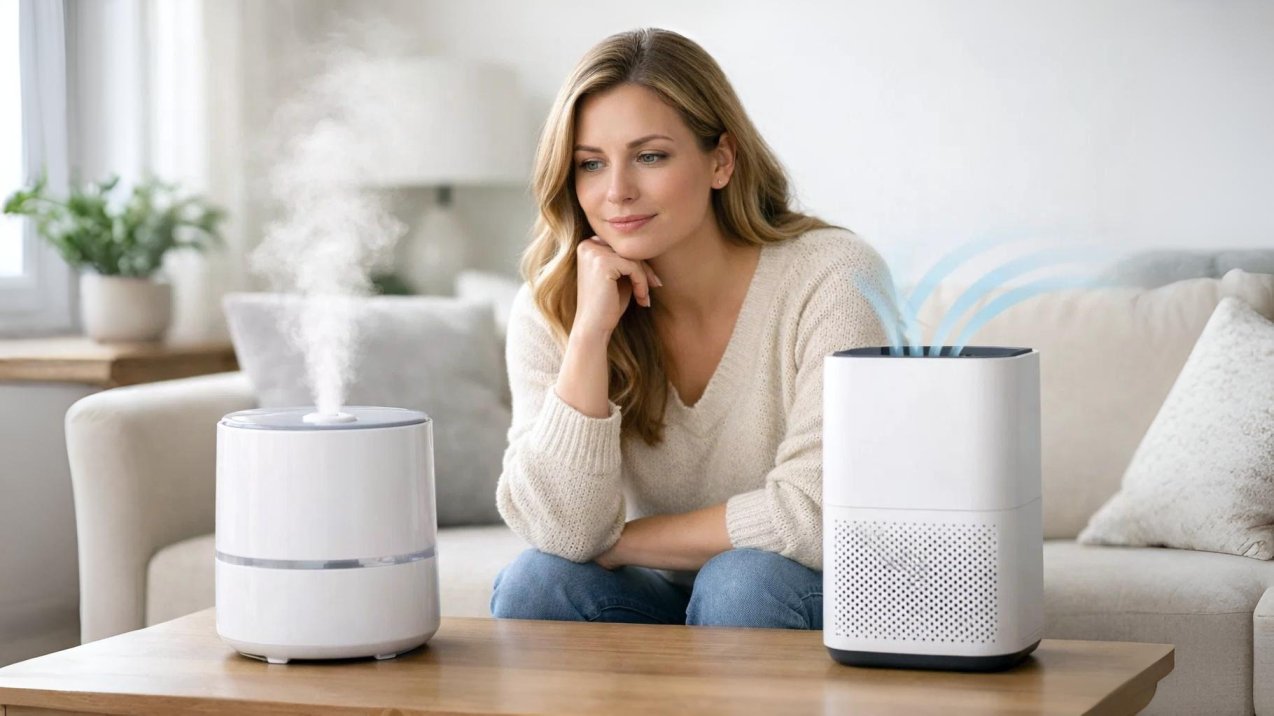
Yes, you can use an air purifier and humidifier together in the same room without issues when positioned correctly. The devices serve different purposes and don’t interfere with each other’s core functions. Air purifiers filter particles while humidifiers add moisture, these are complementary actions, not competing ones.
After working with dozens of clients setting up home air quality systems over several years, I’ve found that proper placement makes the difference between devices working harmoniously versus creating problems. The 3-6 foot separation rule prevents moisture from one device affecting the filter performance of the other.
The key consideration is placement distance. Position devices 3-6 feet apart to prevent the humidifier’s moisture output from directly entering the air purifier’s intake. Excess moisture reaching the air purifier filter reduces its effectiveness and can promote mold growth inside the filter housing.
Room size affects how well both devices work together. In rooms under 200 square feet, running both simultaneously may create excess humidity that condenses on windows and walls. Monitor humidity levels with a hygrometer (available for $10-15 at hardware stores) and keep relative humidity between 30-50%.
Most homes benefit from using both devices during winter months when heating systems dry indoor air while dust and allergens accumulate. The humidifier addresses dry skin, static electricity, and respiratory comfort while the air purifier handles particles and allergens that irritate breathing. Many people ask can I use a humidifier with an air purifier safely, and the answer is yes when following proper placement guidelines.
Do Humidifiers Purify Air or Do You Need Both Devices at Home?
Do humidifiers purify air? No, humidifiers do not purify or clean air,they only add moisture. While increased humidity causes some dust particles to become heavier and settle to surfaces instead of floating airborne, this is not active air purification and doesn’t remove allergens, bacteria, or pollutants.
How Humidity Affects Airborne Particles
Adding moisture to air changes how particles behave:
- Dust settling: Higher humidity makes dust particles absorb moisture, become heavier, and fall to surfaces faster
- Static reduction: Proper humidity (30-50%) reduces static electricity that keeps particles suspended in air
- No filtration: Settled particles remain in your home on furniture and floors rather than being captured and removed
Many people assume humidifiers purify air through this settling effect, but this is a misconception, settled particles are simply relocated, not eliminated from your environment.
This settling effect doesn’t clean your air, it just moves particles from airborne to surface-borne. You still breathe these particles when they’re disturbed by movement, and they still trigger allergies for sensitive individuals. The core difference between air purifier and humidifier is that purifiers actively remove particles while humidifiers only change moisture levels.
When You Need Just One Device
Single-device situations depend on your specific air quality problems:
- Humidifier only: Dry skin, static electricity, dry throat upon waking, humidity below 30% on a hygrometer
- Air purifier only: Allergies to dust/pollen/pets, asthma triggers, smoke or cooking odors, visible dust accumulation
- Both devices: Combination of low humidity and allergy/air quality concerns (common in winter)
Most Americans need air purifiers for particle removal rather than humidifiers alone, though winter heating often creates conditions requiring both devices simultaneously. Understanding what’s the difference between air purifier and humidifier functionality helps determine which device addresses your specific indoor air concerns.
Do Humidifiers Affect Air Purifiers When Running at the Same Time?
Do humidifiers affect air purifiers when both run simultaneously? Yes, humidifiers can negatively impact air purifier performance if positioned too close or if they create excessive room humidity. The primary concern is moisture reaching the air purifier’s filters.
How Excess Humidity Damages Air Purifier Filters
Moisture from humidifiers affects filter performance through several mechanisms:
- HEPA filter degradation: Excess moisture causes filter fibers to swell and clump, reducing filtration efficiency by 15-30%
- Mold growth risk: Damp filters create environments where mold spores captured by the filter can grow and release back into air
- Carbon filter saturation: Activated carbon becomes less effective at absorbing odors when saturated with water vapor
Maintain room humidity between 30-50% to prevent these issues. Humidity above 60% significantly increases risk of filter damage and mold growth inside the air purifier housing. People often wonder do humidifiers affect air purifiers negatively?, and the answer is yes if humidity exceeds recommended levels or devices are positioned too close together.
Optimal Placement for Running Both Devices
Position devices strategically to maximize benefits while minimizing interference:
- Opposite corners: Place in diagonal corners of the room for maximum separation and air circulation
- Different height levels: Humidifier near floor level, air purifier elevated 2-3 feet improves air mixing
- Distance from moisture: Keep air purifier intake at least 3-6 feet from humidifier’s mist output direction
Point the humidifier’s output away from the air purifier to prevent direct moisture stream contact. Most humidifiers have directional nozzles you can adjust.
Can I Use a Humidifier with an Air Purifier Without Problems?
Yes, can I use a humidifier with an air purifier without problems by following proper setup and maintenance practices. Thousands of households successfully run both devices simultaneously during winter months without filter damage or performance issues.
Best Practices for Using Both Devices Together
Follow these guidelines for trouble-free operation:
- Monitor humidity: Use a digital hygrometer to maintain 30-50% relative humidity and adjust humidifier output accordingly
- Clean humidifiers weekly: Empty, rinse, and refill with fresh water daily; deep clean with vinegar weekly to prevent bacteria and mineral buildup
- Check air purifier filters monthly: Inspect for excessive moisture or mold; replace filters on manufacturer’s recommended schedule
- Run air purifier continuously: Constant operation maintains consistent air quality and prevents moisture accumulation during off periods
Most issues arise from neglected maintenance rather than from the devices inherently conflicting. Regular cleaning prevents bacteria growth in humidifiers and ensures air purifiers continue filtering effectively.
Signs Your Setup Needs Adjustment
Watch for these indicators that devices need repositioning or humidity adjustment:
- Condensation on windows: Indicates excessive humidity (above 60%) requiring humidifier output reduction
- Musty smell from air purifier: Suggests moisture reaching filters; increase device separation distance
- White dust on furniture: Mineral deposits from humidifier mist; switch to distilled water or different humidifier type
- Filter replacement needed early: Premature filter degradation indicates excess room humidity affecting filter life
Address these signs immediately to prevent mold growth and maintain effective air cleaning. Indoor humidity above 60% significantly increases mold growth risk within 24-48 hours.
Conclusion
The difference between air purifier and humidifier is fundamental, one removes contaminants while the other adds moisture. Understanding this distinction helps you choose the right device for your specific air quality problems.
Most US homes need both devices during winter months when heating creates dry air and closed windows trap allergens indoors. Proper placement 3-6 feet apart and humidity monitoring between 30-50% ensures both devices work effectively without interference.
Check your home’s current humidity level this week using a hygrometer from any hardware store. If below 30%, add a humidifier. If you have allergies or notice dust accumulation, add an air purifier. Position devices in opposite corners of your most-used room and monitor humidity weekly to maintain optimal indoor air quality.
FAQs
What’s the difference between air purifier and humidifier?
What’s the difference between air purifier and humidifier devices is their function: air purifiers remove particles, allergens, and pollutants from existing air through filtration, while humidifiers add moisture to dry air. The difference between air purifier and humidifier technology means they solve completely different problems, one cleans air, one makes air less dry.
Can you run an air purifier and humidifier at the same time?
Yes, can you use an air purifier and humidifier together safely by placing them 3-6 feet apart and maintaining room humidity between 30-50%. The devices serve complementary purposes and don’t interfere when positioned correctly and humidity is monitored.
Will a humidifier make my air purifier work better?
No, humidifiers don’t improve air purifier performance. While proper humidity (30-50%) helps some dust particles settle faster, this doesn’t enhance the air purifier’s filtration. Excess humidity above 60% actually reduces air purifier effectiveness by damaging filters.
Do I need both an air purifier and humidifier in winter?
Most homes benefit from both devices during winter when heating systems create dry air below 30% humidity while allergens and dust accumulate indoors. The humidifier addresses dryness while the air purifier removes particles that trigger allergies and breathing issues.
Can high humidity from a humidifier ruin my air purifier?
Yes, excessive humidity above 60% can damage air purifier filters by causing fiber swelling, reducing filtration efficiency, and promoting mold growth inside the filter housing. Maintain 30-50% humidity and position devices 3-6 feet apart to prevent damage.