
Key Takeaways
- Scalp contact is non-negotiable: Minoxidil only activates when it reaches your follicles directly, not the hair shaft itself
- Consistency beats timing: Morning or night makes no real difference; repeated missed doses do
- Early shedding means it’s working: A temporary increase in hair loss signals a healthy shift in the hair growth cycle, not failure
- The 4-hour window protects absorption: Showering, sweating, or sleeping on a fresh application cuts results short
- Patience is part of the treatment: Visible regrowth typically takes 3 to 6 months of consistent daily use to show up
Introduction
You open the box, read the instructions, and still aren’t totally sure if you’re doing it right. Sound familiar?
How to use minoxidil correctly is one of the most Googled questions in the hair loss space, and for good reason. The difference between seeing results and giving up at month two often comes down to application habits, not the product itself.
Minoxidil works by increasing blood flow to hair follicles and extending the active growth phase of your hair cycle. But here’s what most guides skip: the mechanism only activates when the formula actually reaches your scalp. Not your hair. Your scalp.
This guide covers how to apply minoxidil by form, how to fit it into your minoxidil routine, and what the real timeline looks like.
How Minoxidil Works and Why Scalp Contact Changes Everything
Minoxidil is a vasodilator, which means it widens blood vessels near the hair follicle to improve circulation. Better blood flow brings more oxygen and nutrients to follicles, which pushes them from a resting state back into active growth.
The hair cycle has four phases: anagen (growth), catagen (transition), telogen (resting) and Exogen (shedding). Minoxidil extends the anagen phase, which is why it can slow shedding and encourage new growth over time.
Here’s the part that matters most for how you apply it: if the product stays on your hair instead of reaching your scalp, it does almost nothing. The vasodilatory effect happens at the follicle level.
This is why technique isn’t just procedural. It’s the difference between a treatment that works and one that doesn’t. If you’ve ever wondered does minoxidil work, the answer usually depends on whether it’s reaching your scalp.
How to Use Minoxidil the Right Way, No Matter Which Form You Use
The method you use depends on which form you have. Minoxidil comes in three main forms, and each has a slightly different technique. Dosing also varies by sex, so the table below covers that before getting into the how.
| Men | Women | |
| Concentration | 5% (solution or foam) | 2% or 5% (foam preferred) |
| Dose | 1 mL solution or half a capful of foam | 1 mL solution or half a capful of foam |
| Frequency | Twice daily | Once daily (or twice if directed by a doctor) |
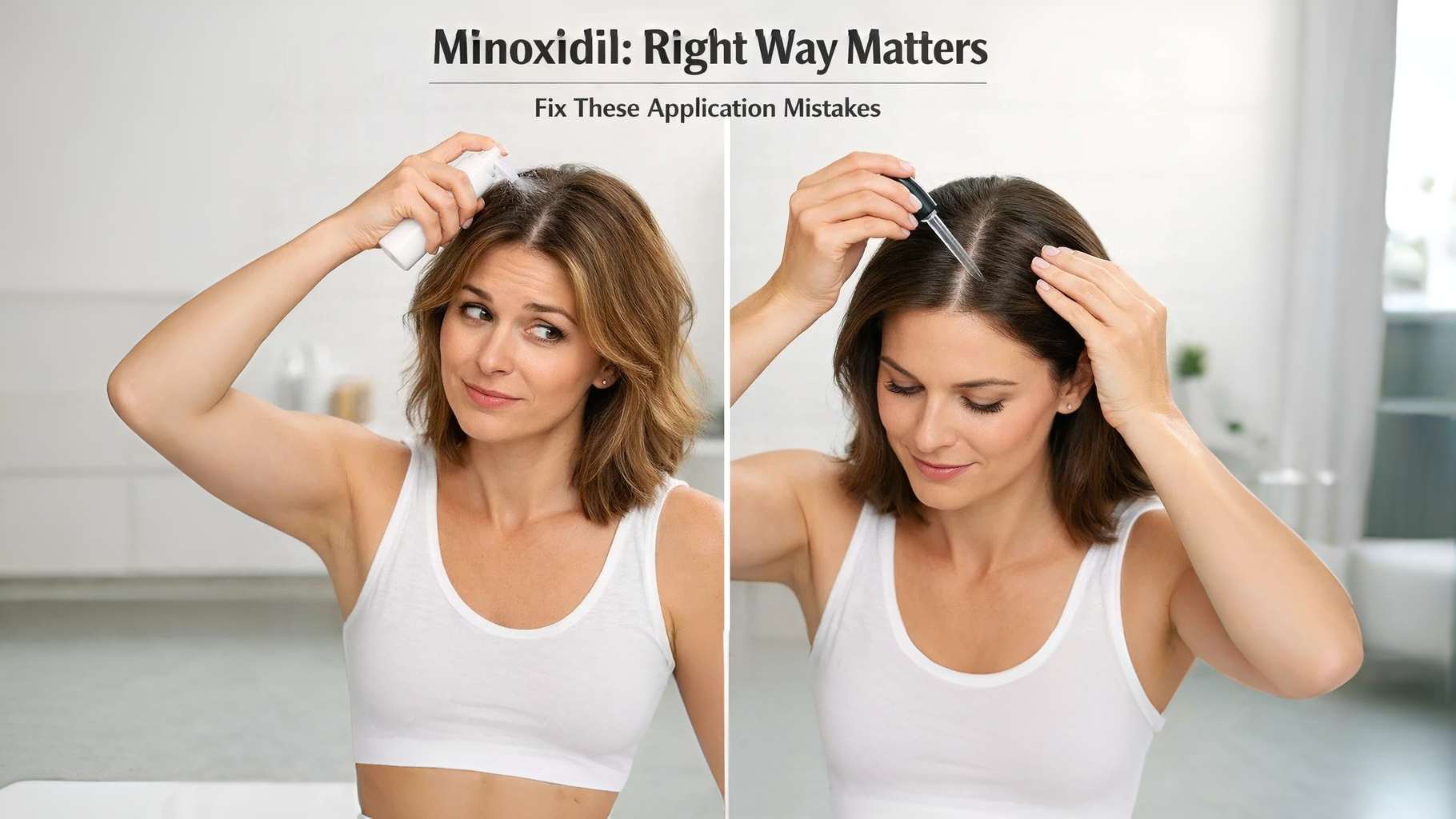
Solution (Dropper Method): This Is the Most Precise Form
Fill the dropper to the 1 mL line. Part your hair into sections and apply the solution directly to the scalp in the affected area. Use your fingertips to spread it gently across the target zone. Wash your hands immediately after.
The dropper gives you the most control over placement, which makes it a solid choice when you’re targeting a specific thinning area.
Foam: Faster to Apply and Less Prone to Dripping
Dispense half a capful onto your fingers, not directly onto your scalp. Part your hair, then press the foam into the scalp using your fingertips. Foam absorbs faster than solution, which makes it popular for people who don’t want to deal with a wet look.
Spray: Best for Covering Larger Areas Quickly
Hold the bottle about an inch from your scalp and spray evenly across the treatment area. Follow up with your fingertips to make sure the product is distributed evenly and actually touching the scalp.
Damp or dry scalp? Dry. Applying to a damp scalp dilutes the formula and reduces how well it absorbs. If you’ve just showered, wait at least 30 minutes before applying.
How to Fit Minoxidil Into Your Daily Routine Without the Mental Load
One of the most common questions about building a minoxidil routine is whether morning or night matters. According to dermatology guidance, it doesn’t. What matters is consistency.
Pick a time that fits your life and stick with it. Many people find that applying after a morning shower or just before bed works best because those are natural daily checkpoints.
Missed a dose? Skip it and apply at your next regular time. Do not double up. Applying twice the amount doesn’t accelerate results; it just raises the chance of scalp irritation.
Styling products: Apply minoxidil first. Let it dry completely, usually 2 to 4 hours, before adding any other products. Layering product on top of fresh minoxidil traps it away from the scalp and blocks absorption.
The 4-hour rule: Don’t shower, exercise heavily, or go to sleep within 4 hours of applying. Sweat and water wash the formula off before it has a chance to absorb properly.
How to Get More Out of Every Single Application
Knowing how to use minoxidil is one thing. Getting the most out of each dose is another.
Start with a clean scalp. Product buildup, sebum, and dead skin cells act as a barrier. Minoxidil absorbs best when the scalp is clean and free of residue. You don’t need to wash every day, but if your scalp tends to get oily, apply before a wash or use a clarifying shampoo a few times a week.
Skip the blow dryer right after applying. Heat speeds up drying, but it also reduces absorption. Let minoxidil air dry instead.
Dermaroller pairing: Some users combine minoxidil with a dermaroller (0.25 to 0.5 mm), a microneedling tool that creates tiny channels in the scalp to improve product penetration. Research published in the NLM suggests this combination of microneedling and minoxidil can outperform minoxidil alone in some users.
Tretinoin and finasteride: Some dermatologists recommend combining one or both with minoxidil for enhanced results. If you’re considering either, that’s a conversation for your doctor. Don’t self-prescribe. Consult your doctor before making any health decisions.
The Minoxidil Shedding Phase Explained: Why It Happens and What It Means
Minoxidil shedding after 6 months would be unusual. Shedding typically happens in the first 2 to 8 weeks of use, and it’s one of the most misunderstood parts of treatment.
Here’s what’s happening: minoxidil shifts follicles from the resting (telogen) phase into the active growth (anagen) phase. Old hairs shed to make room for new ones. This is called telogen effluvium, and it’s a sign the treatment is doing its job.
Real-world users across platforms like Reddit consistently report that shedding was the number one reason they almost quit, only to find that the shedding stopped and new growth followed shortly after.
Shedding that continues beyond 3 months, or shedding that is heavy and widespread, is worth discussing with a dermatologist. But in the first two months? It’s usually a green flag, not a red one.
Minoxidil Timeline: What to Realistically Expect Month by Month
Knowing when minoxidil starts working helps you stay the course when progress feels invisible. Here’s a realistic month-by-month breakdown based on what most users report:
- Month 1: Little to no visible change. You may notice increased shedding.
- Month 3: Shedding slows. Some users notice fine, wispy hairs appearing in treated areas. These are new hairs in early growth stages.
- Month 6: The benchmark moment. Most users see meaningful change here. Hair that was miniaturized may appear thicker or darker.
- Month 12: Peak improvement for most people. Some continue to see gradual gains beyond this point.
How to know if minoxidil is working before you see visible regrowth? Reduced shedding is an early indicator. So is noticing that the fine, wispy hairs in the affected area are starting to gain texture and pigment.
One important note: the gains only hold as long as you keep using it. Stopping reverses the results, typically within 3 to 6 months. Check out minoxidil before and after results to see what real progress can look like over time.
Mistakes That Quietly Kill Your Minoxidil Results
Most people who don’t see results aren’t using the wrong product. They’re using the right product the wrong way.
Applying to hair, not scalp: The formula needs to reach the follicle. Rubbing it into your hair shaft is a wasted product with zero benefit.
Using it on wet or irritated skin: Wet skin dilutes absorption. Irritated skin can lead to redness and flaking that makes people stop using it entirely.
Skipping doses repeatedly: One missed dose is fine. A pattern of missed doses stalls your minoxidil timeline and delays any progress.
Quitting during the shedding phase: This is the most common mistake. Shedding in the early weeks is part of the process, not a sign it’s not working.
Using more than directed: More product doesn’t mean faster results. It raises the chance of side effects like scalp irritation or unwanted facial hair growth without adding any benefit.
Conclusion
The gap between people who see results with minoxidil and those who give up early almost always comes down to the same few things: technique, consistency, and realistic expectations.
How to use minoxidil isn’t complicated, but the details matter. Applying it directly to the scalp, sticking to a daily schedule, and understanding that shedding is progress, not failure, puts you ahead of most people who try it and quit.
Hair regrowth takes time, but it’s a process you can actually influence when you’re doing it right. If you’re using minoxidil specifically for female hair loss, dosing and timing guidelines differ slightly, so take a look at the minoxidil for women guide for more detail.
Have you started a minoxidil routine yet? Drop a comment below and let us know what’s been working for you. Consult your doctor before making any health decisions related to hair loss treatment.
Frequently Asked Questions
How long does minoxidil take to work?
Most users start to see meaningful results around the 3 to 6 month mark of consistent daily use. Visible regrowth before that point is less common, though reduced shedding is often an earlier indicator that the treatment is taking effect.
Can I apply minoxidil to wet hair?
Minoxidil should be applied to a dry scalp, not wet hair. Applying it to a damp scalp dilutes the formula and significantly reduces how well it absorbs into the follicle.
What happens if I miss a dose of minoxidil?
Skip the missed dose and continue with your next regular application. Do not apply a double dose to compensate, as this won’t speed up results and increases the risk of scalp irritation.
Is minoxidil shedding after 6 months normal?
Minoxidil shedding is normal in the first 2 to 8 weeks of use, but shedding that continues at 6 months is not typical and should be evaluated by a dermatologist. Prolonged shedding may indicate a different underlying cause.
How do I know if minoxidil is working?
Reduced shedding is usually one of the first signs that minoxidil is working, even before visible regrowth appears. After 3 to 6 months of consistent use, look for new fine hairs in the treated area, followed by thickening of those hairs over time.