
Introduction
Your memory foam mattress absorbs body oils, sweat, dust mites, and allergens every single night-up to one pint of moisture per person per night, according to sleep researchers. Without proper cleaning, these contaminants create health issues, shorten your mattress lifespan, and compromise sleep quality. Most people don’t realize that learning how to clean memory foam mattress correctly adds years to its life and protects your health investment.
This guide covers everything you need to maintain your memory foam mattress: proper cleaning techniques that won’t damage the foam, realistic lifespan expectations, DIY customization methods, safety concerns about foam materials, and maintenance practices that prevent premature wear. You’ll discover which cleaning products work (and which destroy foam structure), how to handle spills immediately, and whether your mattress poses health risks.
Whether you’re dealing with fresh stains, persistent odors, or simply want to extend your mattress’s useful life, these proven methods deliver results without expensive professional services or risky home remedies.
Step by Step: How to Clean Memory Foam Mattress
Memory foam requires specific cleaning methods because it absorbs water easily and takes extended time to dry. Never saturate the foam or use harsh chemicals that break down its cellular structure.
Strip and Prepare
Remove all bedding, sheets, and mattress protectors. Wash these items separately in hot water (at least 130°F) to kill dust mites and remove allergens. Moving your mattress to a well-ventilated area or opening all bedroom windows airflow is essential for the drying process.
Vacuum Thoroughly
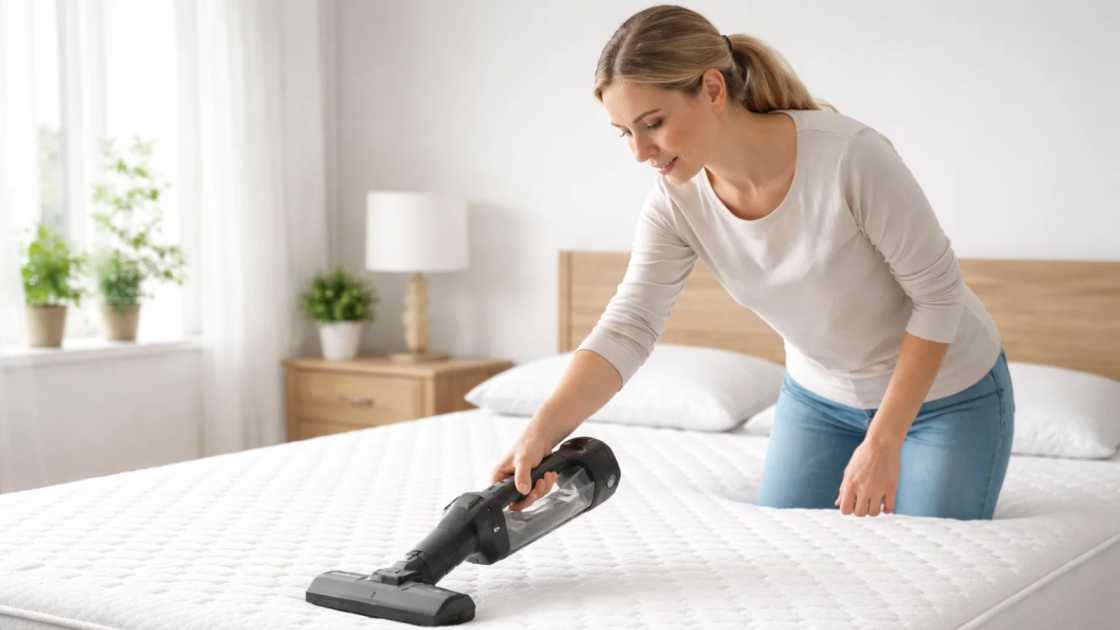
Use your vacuum’s upholstery attachment to clean the entire mattress surface. Move slowly across every inch, paying special attention to seams, edges, quilted areas, and sides where dust accumulates. This step removes loose dirt, dead skin cells, and dust mites before wet cleaning begins.
Address Stains by Type
For fresh liquid spills, blot immediately with dry towels never rub, as this pushes liquid deeper into the foam. Mix equal parts white vinegar and cold water in a spray bottle and lightly mist the affected spot, then blot again with a clean towel. For protein stains (blood, sweat, body fluids), use cold water only hot water sets these stains permanently.
Apply Baking Soda Treatment
Sprinkle a generous layer of baking soda across the entire mattress surface. Let it sit for 8-24 hours to absorb odors and remaining moisture. Vacuum thoroughly to remove all baking soda residue before replacing bedding.
Ensure Complete Drying
Allow 24-48 hours for complete drying with fans running constantly. Never place sheets on a damp mattress, trapped moisture creates mold and mildew that destroy foam and create health hazards.
Lifespan Guide: How Long Do Memory Foam Mattresses Last
Memory foam mattresses typically last between 6 and 10 years with proper care and maintenance. This shorter lifespan compared to other mattress types results from the material’s tendency to develop indents, impressions, and sagging over time.
Foam density directly impacts durabilityhigher-density foam resists body impressions longer and maintains support better than lower-density options. Budget mattresses with low-density foam often show significant wear within 5-6 years, while premium high-density models can exceed 10 years with minimal deterioration.
Several factors accelerate mattress breakdown: body weight (heavier sleepers create deeper impressions), sleep position (side sleepers create more pressure points), lack of proper foundation support, and failure to rotate the mattress regularly. Temperature also mattersmemory foam in consistently hot environments breaks down faster than foam kept at moderate temperatures.
You’ll know your memory foam mattress has reached the end of its useful life when you notice persistent body impressions deeper than 1.5 inches, reduced support causing back or joint pain, visible sagging or lumps, or torn or damaged foam. Don’t wait until severe degradation occurssleeping on a worn mattress creates alignment issues that affect your spine and sleep quality.
Expected Durability: How Long Should Memory Foam Last
Quality memory foam mattresses should deliver 8-10 years of comfortable, supportive sleep when properly maintained. This expected lifespan assumes regular cleaning, rotation every 3-6 months, proper foundation support, and protection from excessive moisture.
The life of a memory foam mattress depends heavily on manufacturing quality. CertiPUR-US certified foam indicates testing for durability, performance, and emissions, these certifications signal higher-quality materials that resist premature breakdown. Cheap memory foam often uses lower-grade polyurethane that compresses permanently after just a few years.
Three maintenance practices extend your mattress lifespan significantly: using a waterproof mattress protector prevents liquid damage (the leading cause of early foam deterioration), rotating the mattress 180 degrees every 3-6 months distributes wear evenly across the surface, and keeping the mattress on proper foundation support (solid platform or slats no more than 2.75 inches apart) prevents sagging.
Track your mattress purchase date and conduct annual assessments of comfort and support. If you’re waking with new aches, tossing and turning more frequently, or seeing visible impressions, your mattress may need replacement even before reaching the typical 8-10 year mark.
People also read: Review on Memory Foam Vs Hybrid Mattress For Better Sleep.
DIY Customization: How to Cut Memory Foam
Cutting memory foam mattresses allows customization for RVs, campers, daybeds, or unusual bed frames. How to cut a memory foam mattress correctly requires the right tools and technique to achieve clean, straight edges.
Essential Tools
A serrated bread knife works for thin foam up to 4 inches, while an electric carving knife handles thicker mattresses more easily. You’ll also need a measuring tape, straight edge or yardstick, permanent marker, and optionally a hot wire cutter for perfectly smooth edges.
Cutting Process
First, remove the mattress cover if possible. Measure carefully and mark your cut lines with a permanent marker and straight edge. Place the mattress on a flat surface. For straight cuts, have a second person support both sides of the cut while you see along the marked line that prevents crooked cuts and sideways bending.
When using a serrated knife, use long, smooth sawing motions rather than short choppy cuts. Let the blade do the work, cutting tears the foam and creates uneven edges. For thick mattresses, one technique involves clamping the foam between two pieces of wood to compress it, making it denser and easier to cut cleanly.
After cutting, smooth any rough edges with fine-grit sandpaper. If your mattress had an inner cover, stitch the opening closed with needle and thread to prevent foam degradation from exposure.
Cleaning Tips: How to Clean Memory Foam Mattress Topper
Memory foam toppers require different cleaning approaches than full mattresses due to their thinner construction and easier handling. How to wash a memory foam mattress topper correctly protects your investment without causing damage.
Never Machine Wash
Memory foam toppers should never go in washing machines; the agitation tears the foam’s cellular structure and creates permanent lumps. The foam also absorbs excessive water that takes days to dry, creating mold and mildew risks.
Proper Cleaning Method
Remove the topper’s cover (if it has one) and machine wash separately at 40°C. Vacuum the topper’s surface with a handheld vacuum to remove dust and debris. For stains, mix one tablespoon of mild detergent or dish soap in one cup of water. Dip a clean cloth in the solution, wring it out thoroughly so it’s barely damp, and gently blot the stained area using circular motionsnever rub or scrub.
Deodorizing and Drying
Sprinkle baking soda across the entire surface and let it sit for several hours before vacuuming thoroughly. This removes odors naturally without chemicals. Air dry the topper completely in a well-ventilated area, ideally with direct sunlight for natural sanitization. Never use high heat or place near heatersheat damages memory foam permanently.
Clean both sides of your topper every 3-4 months, and always use a mattress protector to minimize the need for deep cleaning.
Maintenance: Can You Flip a Memory Foam Mattress?
Can you flip a memory foam mattress? No memory foam mattresses should not be flipped over. These mattresses feature engineered layer systems designed to function in a specific orientation: cooling covers on top, comfort foam in the middle, and high-density support foam at the base.
Flipping the mattress places the firm support layer against your body and the soft comfort layer at the bottom, completely reversing the intended function. This creates uncomfortable sleeping surfaces, reduces pressure relief, and fails to provide proper spinal support.
Rotation Instead of Flipping
Although you can’t flip memory foam mattresses, you should rotate them 180 degrees every 3-6 months. This practice distributes wear evenly across the surface and extends mattress lifespan significantly, especially if you share the bed with a partner who sleeps in the same position nightly.
To rotate properly, slide the mattress 90 degrees so it’s parallel to the footboard and headboard, then rotate it around so the head end becomes the foot end. This simple practice prevents permanent body impressions from forming in concentrated areas.
Memory foam mattress foundation requirements also matterthese mattresses need solid platform beds or slatted bases with slats spaced no more than 3 inches apart. Box springs don’t provide adequate support and may void warranties.
Expansion Time: How Long for Memory Foam Mattress to Expand
Memory foam mattresses arrive compressed in boxes and require expansion time before use. How long does a memory foam mattress take to expand? Most manufacturers recommend 24-72 hours for complete expansion, though many mattresses reach approximately 90% of their intended form within the first few hours.
Expansion Process
Unbox your mattress immediately upon arrival/prolonged time in a compressed state extends expansion time. Place it on a flat, solid surface in a well-ventilated room. Cut away the plastic packaging carefully and watch the mattress begin expanding. The memory foam expansion process happens automatically as air fills the foam’s cellular structure.
Several factors influence expansion speed: foam density (denser foam takes longer), room temperature (warmer rooms accelerate expansion), and how long the mattress remains compressed during shipping. Cold temperatures slow expansion significantly if your mattress arrives in winter, keep the room warm to speed the process.
When Can You Sleep on It?
While technically usable after a few hours, waiting the full 48 hours produces optimal comfort and performance. Sleeping on partially expanded foam affects both comfort and longevity; the foam hasn’t regained its full structural integrity yet.
Avoid placing heavy objects on the mattress during expansion. Let the natural process complete without interference. Some off-gassing odor (new foam smell) is normal during the first 24-48 hours ventilate the room well to dissipate it quickly.
Safety Concerns: Is Memory Foam Toxic or Dangerous
Is memory foam toxic? Modern memory foam mattresses contain volatile organic compounds (VOCs) that release through off-gassing, but certified foams pose minimal health risks when properly ventilated. Understanding these concerns helps you make informed decisions about your sleep environment.
VOC Emissions Explained
VOCs are chemicals that evaporate into air at room temperature, originating from the polyurethane foam and chemical adhesives used in memory foam construction. The Environmental Protection Agency (EPA) confirms that long-term exposure to high VOC levels can cause headaches, respiratory irritation, and potential organ damage.
The Centers for Disease Control and Prevention (CDC) reports that VOC exposure commonly causes headaches, dizziness, and fatigue, especially during the first few days after unpacking a new mattress. Certain VOCs like formaldehyde, benzene, and toluene have been classified as carcinogens by the International Agency for Research on Cancer (IARC), though mattress levels are typically low.
Is Memory Foam Dangerous for Sensitive Individuals?
People with asthma or allergies face higher risks from VOC exposure, as the Asthma and Allergy Foundation of America (AAFA) notes that poor indoor air quality from VOCs exacerbates respiratory symptoms. The German Federal Institute for Risk Assessment (BfR) recommends reducing VOC exposure, warning they can negatively impact the central nervous system, liver, kidneys, and reproductive organs.
Risk Reduction Strategies
Unpack your mattress in a well-ventilated area for several days before moving it to your bedroom. Use air purifiers with HEPA filters to remove airborne VOCs. Look for CertiPUR-US certified foam, which ensures testing for emissions, content, and durability. This certification indicates lower VOC levels and safer materials overall.
Frequently Asked Questions
Can you wash a memory foam mattress in water?
No, never submerge or saturate memory foam mattresses with water. The foam absorbs liquid rapidly and requires 24-48 hours to dry completely, creating mold and mildew risks. Use spot cleaning with barely damp cloths instead, and always blot rather than rub stains.
How often should I clean my memory foam mattress?
Vacuum your mattress monthly to remove dust and allergens. Perform deep cleaning with baking soda treatment every 3-4 months. Addressing spills and stains immediately when they occurdelayed cleaning allows liquids to penetrate deeper into the foam, making removal nearly impossible.
What foundation works best for memory foam mattresses?
Use a solid platform bed or slatted base with slats spaced no more than 2.75-3 inches apart. Wider slat spacing causes sagging and may void your warranty. Never use traditional box springs; they don’t provide the firm, even support that memory foam requires for proper performance.
Does the memory foam mattress smell go away?
Yes, the new foam smell (off-gassing) dissipates within 24-72 hours in well-ventilated spaces. Open windows, run fans, and keep the room temperature moderate to accelerate the process. If odors persist beyond one week, contact the manufacturer, excessive smell may indicate quality issues.
How do I know when to replace my memory foam mattress?
Replace your mattress when you notice body impressions deeper than 1.5 inches, persistent back or joint pain upon waking, visible sagging or lumps, or when it reaches 8-10 years of age. Don’t wait for complete deterioration, sleeping on worn mattresses creates spinal alignment issues that affect overall health.
Conclusion
Proper memory foam mattress maintenance combines regular cleaning, strategic rotation, appropriate foundation support, and protection from moisture damage. When you learn how to clean memory foam mattress correctly using gentle spot-cleaning methods, vacuum regularly, and apply baking soda treatments, you add years to your mattress lifespan while protecting your health from allergens and dust mites.
Understanding realistic durability expectations (6-10 years depending on quality), expansion requirements (24-72 hours for new mattresses), and safety considerations (VOC off-gassing from synthetic materials) helps you make informed decisions about your sleep environment. Remember that memory foam mattresses cannot be flipped only rotated every 3-6 months and require specific foundation support to prevent premature sagging.
Start implementing these maintenance practices today. Strip your bedding, vacuum your mattress thoroughly, and treat any stains using the cold-water blotting method described above. Set calendar reminders for quarterly deep cleaning and rotation. Your consistent care protects your mattress investment and ensures better sleep quality for years to come.