Key Takeaways
- The Starting Point: A nickel-sized amount covers most face and neck combinations but formula texture changes this entirely.
- Skin Type Decides: Oily skin needs a dime-sized amount of lightweight gel; dry skin can go up to a quarter-sized amount of rich cream, especially at night.
- Too Much Is Real: Greasy skin 15 minutes post-application, milia, and persistent breakouts are all signs of over-moisturizing, not a sign to switch products.
- Still Dry Despite Moisturizing: Wrong formula timing or formula type is almost always the culprit not the amount.
- The Feedback Loop: Your skin tells you when the amount is right. Comfortable, soft, non-greasy within a few minutes is the target.
Introduction
You follow the routine. You cleanse, you moisturize. And yet your skin still feels tight two hours later or it looks like an oil slick by noon. So you add more products. Or you cut back entirely. Neither seems to fix it.
The question of how much moisturizer should I use on my face sounds simple. Most articles hand you a coin-size answer and move on. But the real issue is not the measurement alone, it’s how formula, skin type, and timing interact to make the same nickel-sized amount work perfectly on one person and completely wrong on another.
This post gives you the actual diagnostic framework: how much to start with, how to read your skin’s feedback, and what it means when more moisturizer is clearly not the answer.
The Coin-Size Rule for How Much Moisturizer to Use on Your Face
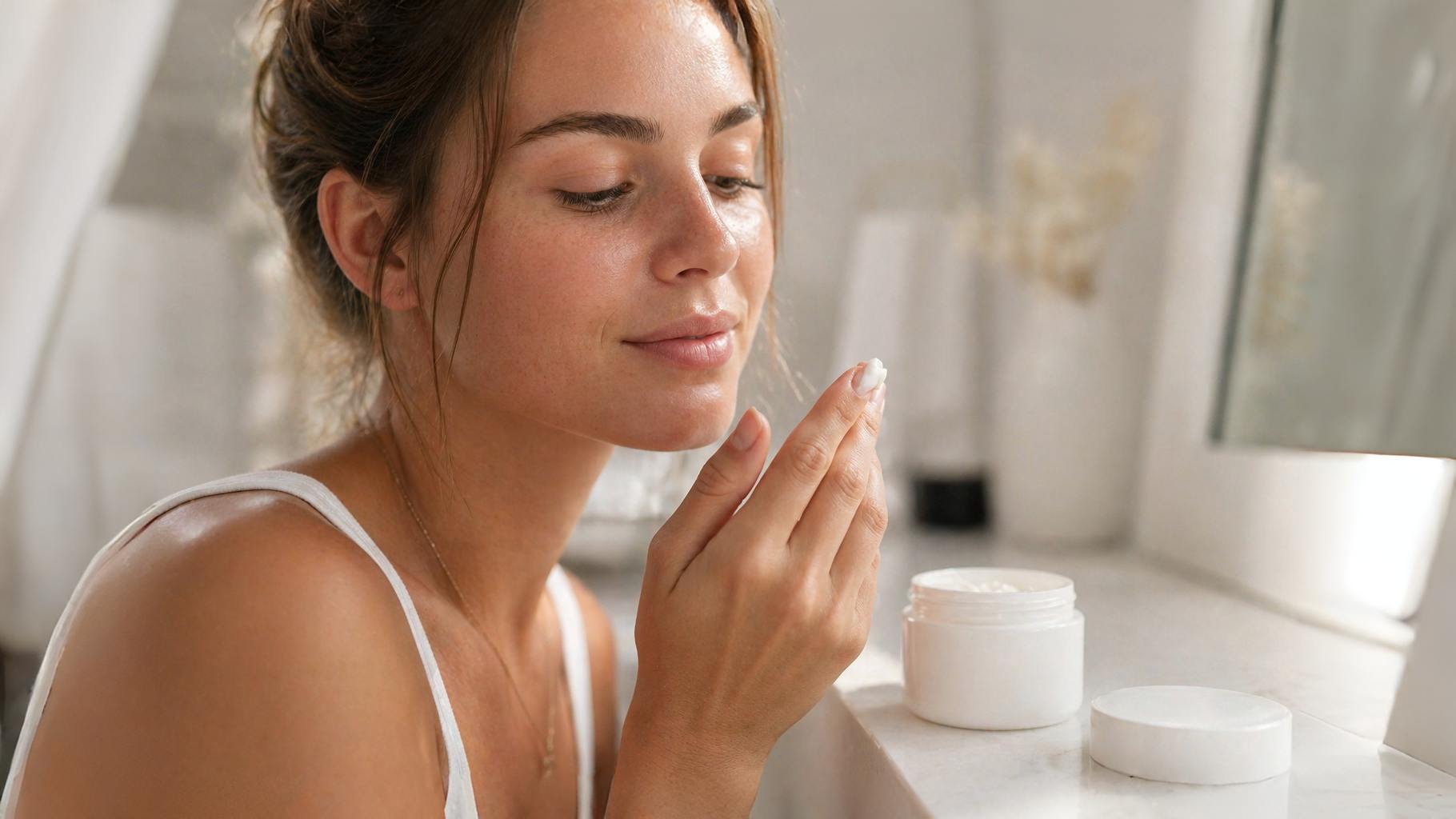
For most people, a nickel-sized amount of moisturizer is the right place to start for the full face and neck. A study published in the Journal of Cosmetic Dermatology found that the water content increased significantly with moisturizer doses of 1.0 mg/cm2 and 2.0 mg/cm2 which translates roughly to a nickel for your face and neck combined.
That is the baseline. But here is what the coin-size rule does not tell you: formula texture changes everything. A rich, balm-style night cream and a lightweight water-gel moisturizer are not the same application. If you are using a thick cream, you likely need less than a nickel. If you are using a sheer gel, you can be slightly more generous. The goal is full coverage with no leftover product sitting on the surface after a minute or two of gentle patting.
Application method matters too. Dot the moisturizer on your forehead, both cheeks, your nose, and chin. Then press and pat but do not rub. Rubbing pulls at the skin and reduces absorption. Pressing pushes the product in.
How Much Moisturizer Should I Use on My Face Per Day: Morning vs. Night
Morning and night amounts are not identical, and most skincare advice glosses over this. In the morning, your goal is hydration plus a stable base for SPF and makeup. A nickel-sized amount applied to slightly damp skin does exactly that. Keeping moisture around applying sunscreen or moisturizer first in the right order matters here too.
At night, your skin is in repair mode. According to research on PubMed Central , transepidermal water loss is higher overnight, which means your skin is losing hydration faster while you sleep. A slightly more generous application at night particularly if your skin is dry or you are using active ingredients like retinol is justified. For most people, this means going from a nickel to a quarter-sized amount in the evening. For oily skin, the nighttime amount stays closer to a dime.
How Much Moisturizer You Actually Need Changes Completely by Skin Type
| Skin Type | Recommended Amount | Best Formula to Reach For | Warning Sign You’ve Overdone It |
| Oily | Dime-sized | Lightweight gel or water-based lotion | Shine within 10 minutes, clogged pores, pilling under makeup |
| Dry | Quarter-sized (nickel at minimum) | Rich cream, balm, or ceramide-based formula | Skin feels coated or heavy; milia under eyes or on cheeks |
| Combination | Nickel-sized overall, dime on T-zone | Gel-cream hybrid | Oily T-zone + dry cheeks, a sign of applying uniformly instead of zoning |
| Normal | Nickel-sized | Lotion or light cream | Greasy or sticky feeling 15 minutes post-application |
| Sensitive | Nickel-sized, applied gently | Fragrance-free, minimal-ingredient cream | Redness, tingling, or breakouts shortly after application |
How Much Moisturizer to Use on Oily Skin Without Clogging Pores
The opinion here is direct: oily skin still needs moisturizer. Skipping it is one of the most common skincare mistakes, because dehydrated skin signals your sebaceous glands to produce more oil to compensate, making oiliness worse, not better.
How much moisturizer to use on oily skin is a dime-sized amount of a lightweight, non-comedogenic formula. That means no lanolin, no coconut oil, no heavy occlusives. Gel-based moisturizers with hyaluronic acid or niacinamide are the better picks. Apply it to slightly damp skin after cleansing and let it absorb fully before applying anything else. If your skin looks shiny within ten minutes, that is too much or the wrong formula entirely. You can read more about the benefits of moisturizing your face daily even with oily skin.
How Much Moisturizer Should I Use for Dry Skin Without Overdoing It
Dry skin is the one type where generosity is genuinely warranted but the window to get it right is narrow. If you apply too little, your skin barrier cannot seal in enough hydration. If you apply too much, particularly a heavy occlusive cream, you can interfere with your skin’s natural moisture regulation and trigger milia.
If your question is how much moisturizer should I use for dry skin? Start with a nickel-sized amount, press it in fully, wait two minutes, and assess. If your skin still feels tight or dull, add a second thin layer rather than doubling the first application. A ceramide-containing formula reinforces the skin barrier at the ingredient level, so you get more benefit from less product.
Pro Tip: More product does not mean more hydration. Correct formula plus correct timing beats a heavy-handed application every time.
The Signs You Are Using Too Much Moisturizer on Your Face
Too much moisturizer on the face does not always look like an obvious grease slick. These are the real signals, according to dermatologists cited in Women’s Health:
- Your skin feels greasy or slick more than 15 minutes after application
- Your makeup pills or slides off by midday
- You are developing small closed bumps on your cheeks or around your eyes
- Your skin looks dull even though you are moisturizing twice daily.
That last one surprises most people. Over-moisturized skin can develop a film that traps dead skin cells instead of letting them shed naturally resulting in a flat, dull appearance despite a consistent routine.
The fix is almost never to switch products immediately. Cut the amount in half first. Wait a week. Let your skin recalibrate. If the symptoms improve, the amount was the problem. If they persist, then it is a formula issue.
Can Heavy Moisturizer Cause Milia, and What Does That Look Like?
Yes and this is one of the most underreported downsides of over-moisturizing. Milia are small, white, keratin-filled cysts that form when dead skin cells get trapped under the surface. They are common around the eye area and on the cheeks, and they are frequently triggered by heavy, occlusive moisturizers applied in excess.
Milia look like tiny white pearls just beneath the skin; they are firm, not inflamed, and do not pop like a pimple. If you notice them forming after starting a new heavy cream or increasing your moisturizer amount, reduce the amount or switch to a lighter formula. A dermatologist can safely extract milia if they persist.
My Skin Is Dry No Matter How Much I Moisturize: Here Is Why
This is the most common moisturizer frustration and the answer competitors consistently skip. If your skin is dry no matter how much you moisturize, the problem is almost never the quantity. Here are the three most likely causes:
1. You are applying to completely dry skin: Moisturizer does not create hydration it seals in hydration that is already there. Apply it within three minutes of cleansing while your skin is still slightly damp. This is what the skincare community calls the three-minute rule, and it is the single most impactful technique most people are not using.
2. Your formula is missing a humectant: Occlusives like shea butter and petrolatum seal the surface beautifully but if there is no water to seal in, they lock in dryness instead. Look for hyaluronic acid or glycerin in the formula, which draws water from the environment into the skin before the occlusive seals it.
3. Your skin barrier is compromised: A disrupted barrier cannot hold moisture regardless of what you apply on top of it. Signs include persistent tightness, sensitivity to products that used to work fine, and flaking that does not resolve. A formula with ceramides like those found in CeraVe Moisturizing Cream helps rebuild the barrier at the lipid level rather than just masking the dryness on the surface.
Pro Tip: If your skin is perpetually dry, the three-minute rule and a formula with both humectants and ceramides will do more than doubling your moisturizer amount ever could.
Conclusion
The coin-size rule gives you a starting point and that is exactly what it should be. Knowing how much moisturizer should I use on my face is a question your skin ultimately answers, not a number printed on a product label.
The real skill is learning to read the feedback, skin that feels comfortable, soft, and non-greasy within a few minutes of application is getting the right amount. Skin that looks shiny, feels coated, or breaks out in small bumps is signaling too much and skin that still feels tight an hour later is signaling a formula problem, not a quantity one.
Start with a nickel, adjust for your skin type, and apply it to damp skin every time. Get those three things right and the rest of your routine will perform better because of it. What skin type are you working with and has the coin-size rule ever actually worked for you? Drop your experience in the comments.
Frequently Asked Questions
What is the 3 minute moisturizer rule?
The 3 minute moisturizer rule means applying your moisturizer within three minutes of cleansing, while your skin is still slightly damp. Moisturizer seals in hydration rather than creating it, so applying it to damp skin traps residual water before it evaporates. This timing shift alone can make a meaningful difference in how hydrated your skin stays throughout the day.
How much moisturizer should I use for my whole face?
A nickel-sized amount is the standard starting point for most face and neck coverage. Research found skin hydration increased significantly at 1 to 2 milligrams of moisturizer per centimeter of skin, which corresponds to roughly a nickel. Adjust up slightly for dry skin or at nighttime, and down to a dime-sized amount for oily skin.
Does moisturizer reduce inflammation?
Some moisturizers do help reduce mild skin inflammation, particularly formulas containing ceramides, niacinamide, or colloidal oatmeal, which support and reinforce the skin barrier. A strengthened barrier is less reactive to environmental triggers, which can reduce redness and irritation over time. For persistent or significant inflammation, consult a dermatologist rather than relying on moisturizer alone.
How much moisturizer should I use at night?
Most skin types can use a slightly larger amount at night than in the morning moving from a nickel-sized amount during the day to a quarter-sized amount in the evening. Transepidermal water loss increases overnight, so your skin benefits from a bit more support while it repairs. Oily skin is the exception and should stay closer to a dime-sized amount even at night to avoid congestion.
What does the right amount of moisturizer feel like after application?
When you have used the right amount, your skin should feel soft, comfortable, and lightly hydrated within one to two minutes of application, not greasy, not sticky, and not like there is a visible film sitting on top. If the product is still visibly sitting on the surface after two minutes of gentle patting, you have applied too much. If your skin feels tight within an hour, you have applied too little or need a richer formula.